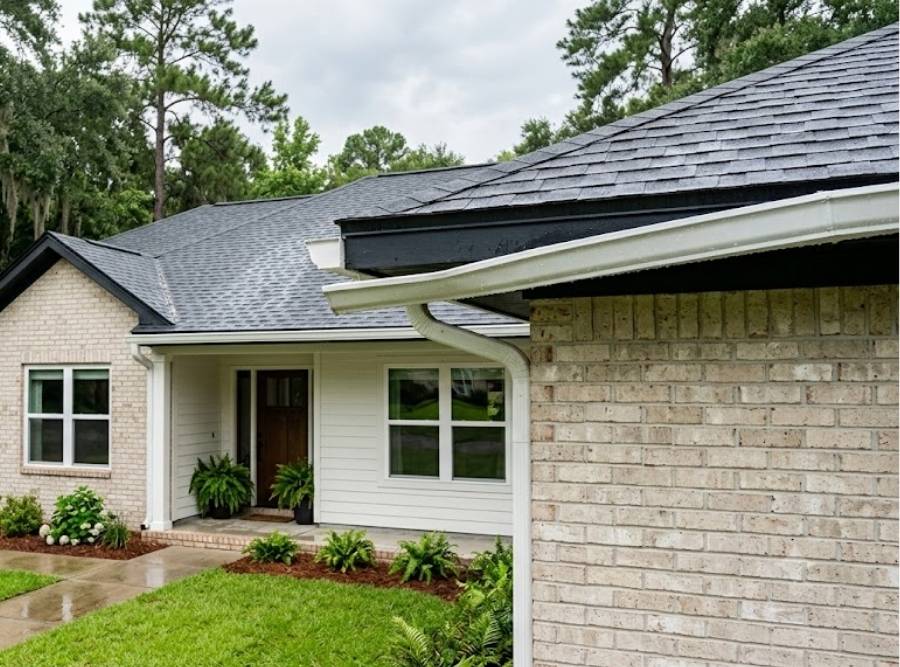
Can Sagging Gutters Be Repaired, or Do They Need Full Replacement in Bloomingdale GA?
Yes, sagging gutters can often be repaired if the problem is limited to loose hangers, failing fasteners, minor alignment issues, or isolated damage while the gutter system remains structurally sound. However, if the gutters are severely bent, repeatedly pulling away from rotted fascia boards, or no longer capable of managing water properly, replacing part or all of the system is usually the more dependable and cost-effective long-term solution.
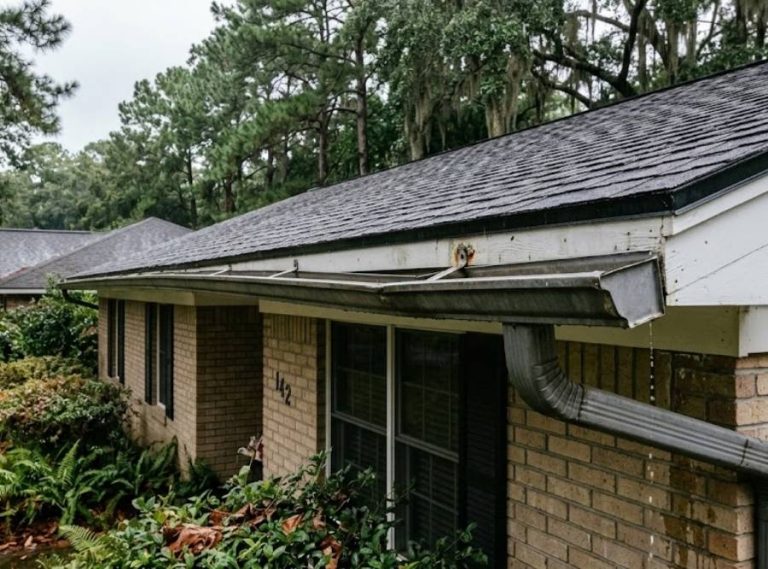
Few exterior problems cause more uncertainty than looking up after a rainstorm and realizing your gutters no longer sit straight along the roofline. A slight dip may not seem urgent at first, but after another heavy storm, the sag becomes more noticeable, water begins spilling over the edge instead of flowing toward the downspouts, and the entire section appears to be pulling away from the house. At that point, most homeowners ask the same question: can this be repaired, or is it time to replace everything?
The answer depends far less on how the gutter looks than on why it is sagging in the first place. Two homes can show nearly identical symptoms while requiring completely different solutions. One may simply need new hidden hangers and proper realignment, while the other may have years of hidden fascia deterioration that makes replacement unavoidable. Determining the difference requires looking beyond the visible sag and understanding how the entire drainage system is performing.
In Bloomingdale, this question becomes especially important because gutter systems work under demanding conditions for much of the year. Long periods of humidity, frequent afternoon thunderstorms, tropical weather, and the steady accumulation of pine needles and live oak leaves place continuous stress on gutters and their attachment points. Even a well-installed system experiences thousands of gallons of water moving across the roof over time, which is why identifying the true source of sagging is far more valuable than simply tightening a few loose screws.
What Actually Causes Gutters to Sag?
Many homeowners assume gutters sag simply because they have become old. While age certainly plays a role, age alone rarely causes a properly installed seamless gutter system to pull away from a home. Instead, sagging almost always develops from years of gradually increasing stress that weakens one or more components responsible for supporting the system.
One of the most common issues we encounter is hidden hanger failure. Modern seamless gutters rely on concealed hangers fastened securely into the fascia board to support the weight of both the gutter and the tremendous amount of water it carries during heavy rainfall. Every storm places temporary weight on those attachment points, and over many years, repeated loading can slowly loosen fasteners or reduce their grip, particularly if the fascia has begun absorbing moisture. Homeowners often notice only a slight dip at first, but once one hanger begins failing, additional stress transfers to the surrounding hangers, allowing the sagging section to grow larger over time.
Older homes around Historic Downtown Bloomingdale and other established neighborhoods sometimes have spike-and-ferrule systems instead of modern hidden hangers. While these systems served homeowners well for many years, the large spikes naturally loosen through repeated expansion and contraction as temperatures fluctuate. Eventually, homeowners begin noticing nails backing out of the fascia, small gaps forming behind the gutter, or sections that visibly flex whenever they fill with rainwater. Hammering those spikes back into place may temporarily improve the appearance, but it rarely addresses why they loosened in the first place.
Another significant contributor is excessive weight caused by clogged gutters. Leaves, pine needles, twigs, seed pods, and roof debris gradually accumulate inside the gutter until they begin trapping water instead of allowing it to drain. Wet organic debris is surprisingly heavy, and during Bloomingdale’s frequent summer thunderstorms, that weight increases dramatically as the gutter fills with water. Over time, the continuous strain bends aluminum, loosens hangers, and places additional stress on the fascia itself. What appears to be a gutter problem often begins as a maintenance problem that was allowed to continue for several seasons.
Why the Fascia Board Is Often the Real Problem
One of the biggest misconceptions homeowners have is believing the gutter itself is responsible for pulling away from the house. In reality, the fascia board supporting the gutter frequently becomes the weakest link in the entire system.
The fascia is much more than decorative trim beneath the roof edge. It serves as the structural surface that supports the gutter system while also helping protect the roof assembly from moisture intrusion. When gutters leak, overflow repeatedly, or allow water to run behind them, that moisture is often absorbed directly into the fascia over months or even years. Because the damage develops behind the gutter, many homeowners never realize the wood has begun deteriorating until fasteners start pulling loose or entire sections begin separating from the home.
We regularly inspect gutter systems where homeowners expected a quick repair only to discover that the wood beneath the hangers had softened significantly from prolonged moisture exposure. In those situations, installing longer screws or additional brackets may temporarily secure the gutter, but the weakened wood cannot provide the long-term support necessary to withstand future storms. The gutter may appear repaired for a short time, yet the same section often begins sagging again because the underlying structural issue was never corrected.
High humidity throughout coastal Georgia accelerates this process by slowing the drying of moisture trapped behind clogged gutters. Homes shaded by mature live oaks or surrounded by dense vegetation frequently experience even longer periods of dampness because limited sunlight reduces drying between storms. This is one reason two neighboring homes of similar age can have very different gutter conditions depending on maintenance history, surrounding trees, and drainage patterns.
When a Professional Repair Makes the Most Sense
Despite the concerns homeowners often have when they first notice sagging, many gutter systems can be successfully repaired without replacing the entire installation. The key is confirming that the system’s primary structural components remain in good condition and that the visible sag has not already caused permanent deformation.
When the fascia remains solid, the gutter profile is still straight, and the sag results from localized hanger failure or loose fasteners, repairing the system is often the most practical solution. Replacing worn hardware, restoring the proper pitch, resecuring attachment points, and correcting isolated alignment issues can often return the gutter to full functionality without requiring complete replacement. Because seamless gutters are custom fabricated for each home, preserving an otherwise healthy system is frequently the most economical approach when the damage is limited.
Professional repairs also provide an opportunity to correct issues that contributed to the sagging in the first place. We often discover improperly spaced hangers, insufficient downspout capacity, minor slope problems, or debris accumulation patterns that continue placing unnecessary stress on specific sections of the gutter. Correcting these underlying conditions helps prevent homeowners from experiencing the same failure again after only a few seasons.
Another advantage of timely repairs is preventing additional damage to other parts of the home. Once water begins flowing behind the gutter instead of through it, moisture can begin affecting soffits, fascia boards, exterior trim, landscaping, and even the soil surrounding the foundation. Addressing a localized gutter issue before those secondary problems develop often saves homeowners from much larger repair projects later.
The Signs That Point Toward Replacement Instead
There comes a point where repairing a sagging gutter no longer provides the best long-term value. While homeowners naturally hope for a straightforward repair, certain conditions indicate that replacement is likely to deliver more dependable performance and lower overall maintenance costs in the years ahead.
Permanent deformation is one of the clearest indicators. Aluminum gutters that have remained overloaded for extended periods may develop bends or bows that cannot simply be pulled back into shape. Even if new hangers temporarily restore their position, the metal has already lost some of its structural integrity, making future sagging more likely whenever heavy rainfall or debris places additional weight on the system. Likewise, gutters that have separated from multiple attachment points or repeatedly required repairs often signal that the overall system has reached the end of its practical service life rather than experiencing an isolated failure.
Replacement also becomes the better investment when sagging is accompanied by widespread seam leaks, repeated overflow despite proper cleaning, significant corrosion, or deteriorated fascia requiring structural repairs. Installing new seamless gutters onto properly restored fascia creates a stable foundation for effective water management and eliminates the cycle of repeatedly repairing aging components that continue failing one after another.
Beyond correcting visible problems, replacement also provides an opportunity to evaluate whether the original gutter system was appropriately designed for the home. Larger roof sections, complex roof valleys, additions, or drainage patterns may require larger gutters or improved downspout placement to better handle Bloomingdale’s intense thunderstorms. Simply replacing damaged hardware without addressing those design limitations may leave homeowners facing the same performance issues every time severe weather arrives.
Looking Beyond the Sagging Gutter: Why the Entire Drainage System Matters
One of the biggest differences between a temporary repair and a lasting solution is whether the entire drainage system is evaluated instead of focusing only on the section that appears to be failing. Gutters do not function independently. They rely on properly positioned downspouts, adequate drainage capacity, secure attachment points, correct slope, and a roofline that directs water efficiently into the system. If one of those components is compromised, the stress is eventually transferred somewhere else, often resulting in the sagging that homeowners notice first.
For example, we occasionally inspect homes where a homeowner has replaced several hangers only to discover that the downspout serving that section is partially blocked. During every heavy rain, water backs up inside the gutter because it cannot exit fast enough. The additional weight places constant pressure on the attachment points until the gutter begins pulling away again. In another situation, the gutter may have been installed with too little pitch, allowing water to stand in one section after every storm. Even though the hangers remain secure, the continuous weight gradually bends the aluminum until a visible dip forms. These are problems that cannot be solved simply by tightening a few screws because the real issue lies elsewhere in the system.
This is why a professional inspection should always include the roof edge, fascia, hangers, gutter pitch, downspout performance, drainage around the home, and the condition of surrounding materials. Looking at only the sagging section may solve today’s problem, but understanding how the entire system manages water helps prevent the next one.
Why Waiting Usually Makes the Repair More Expensive
Many homeowners postpone gutter repairs because the system still appears to be functioning “well enough.” Water may only overflow during heavier storms, or the sag may seem too minor to justify immediate attention. Unfortunately, gutter problems rarely remain the same for long. Once the system begins losing its structural support, gravity and repeated rainfall continue working against it every time the weather changes.
As the sag increases, water no longer flows efficiently toward the downspouts. Instead, it begins collecting in the lowest portion of the gutter, increasing the overall weight and placing even greater stress on the remaining attachment points. This often creates a chain reaction where one loose hanger becomes several, one small dip becomes permanent deformation, and one section pulling away eventually causes neighboring sections to shift as well. What could have been a relatively straightforward repair gradually develops into a much larger project simply because the underlying problem continued unchecked.
The surrounding building materials also begin paying the price. Water running behind the gutter can saturate fascia boards, damage soffits, stain siding, and accelerate paint failure along the roof edge. Excess runoff may wash away mulch, erode planting beds, create muddy areas around walkways, or leave water collecting too close to the home’s foundation. None of these problems happen overnight, but they often begin long before homeowners realize how much damage a sagging gutter can quietly cause.
In Bloomingdale, where heavy summer thunderstorms can produce intense rainfall in a short period, delaying repairs leaves very little margin for error. A gutter that handles light showers without much trouble may become completely overwhelmed during the next tropical system or severe thunderstorm, allowing large volumes of water to spill exactly where the drainage system was designed to prevent it.
What We Commonly See on Homes Around Bloomingdale
Every community develops its own maintenance patterns, and gutter systems are no exception. Throughout Bloomingdale, we frequently see homes where mature pine trees and live oaks contribute to recurring debris accumulation that gradually increases the weight carried by the gutter system. Pine needles are particularly challenging because they weave together, creating dense blockages that trap leaves and prevent water from flowing freely toward the downspouts.
Older homes near Historic Downtown Bloomingdale and along portions of Highway 80 often retain aging gutter attachment systems that have performed for decades but are beginning to show their age. Fasteners naturally loosen over time, especially after years of expansion, contraction, and repeated storm activity. Meanwhile, many newer homes expanding toward Pooler and along Pine Barren Road feature larger roof areas that collect significantly more runoff during heavy storms. Even newer gutter systems benefit from periodic inspections to ensure they continue managing those higher water volumes effectively.
One thing these homes have in common is that sagging gutters almost never develop without warning. Long before a gutter begins hanging noticeably lower than the rest of the roofline, homeowners often observe subtle signs such as standing water after rain, gutters that visibly flex during storms, nails working their way out of the fascia, water stains beneath attachment points, or minor overflow that only occurs during heavier rainfall. Recognizing these early warning signs gives homeowners an opportunity to correct relatively small issues before they become expensive structural repairs.
The Right Answer Depends on the Cause, Not Just the Symptom
The question isn’t simply whether sagging gutters can be repaired or whether they need replacement. The better question is why they began sagging in the first place. Once that answer is known, choosing the appropriate solution becomes much more straightforward.
If the problem is isolated to a few loose hangers, aging fasteners, or minor alignment issues while the gutters remain structurally sound and the fascia is still solid, a professional repair can often restore years of reliable performance. On the other hand, if repeated moisture has damaged the fascia, the gutter profile has permanently deformed, or the existing system no longer provides the capacity needed for the home’s roof, replacement is often the smarter long-term investment because it addresses both the visible damage and the conditions that caused it.
At Spartina Seamless Gutters, we believe homeowners deserve recommendations based on the actual condition of their drainage system rather than assumptions. Sometimes that means repairing a localized problem and helping the existing system continue performing effectively. Other times it means recommending replacement because continuing to repair aging components would only postpone larger problems. Either way, the goal remains the same: designing a gutter system that safely moves water away from the home and continues protecting the roof, fascia, siding, landscaping, crawl space, and foundation through years of coastal weather.
Protecting Your Home Starts with Understanding the Real Problem
A sagging gutter is easy to see, but it is rarely the entire story. More often, it is an early warning that something within the drainage system deserves attention before additional damage develops. Whether the solution involves replacing a few hidden hangers, repairing deteriorated fascia, correcting the gutter’s pitch, or installing an entirely new seamless system, making the right decision begins with identifying the actual cause instead of treating only the visible symptom.
For homeowners in Bloomingdale, acting early is especially important because frequent thunderstorms, high humidity, and seasonal debris place continual demands on gutter systems throughout the year. Addressing a sagging section before it progresses into widespread structural damage can help preserve the home’s exterior, reduce future repair costs, and restore confidence that the drainage system will perform when the next major storm arrives.
If you’ve noticed gutters pulling away from your home, overflowing during every rainfall, or showing signs of sagging, Spartina Seamless Gutters can perform a thorough inspection of the entire system. We’ll determine whether a professional repair is the right solution or whether replacement will provide better long-term protection, then explain our recommendations clearly so you can make an informed decision for your home.

Spartina Seamless Gutters leads the Lowcountry in custom seamless gutter fabrication, micro-mesh leaf protection, and exterior water management. Serving residential and commercial properties across Jasper and Beaufort counties, their experienced technicians deliver actionable insights on storm drainage, soffit care, and protecting your home against severe coastal weather.