Why Gutters and Garage Doors Matter More Than You Think
Most homeowners think of gutters and garage doors as completely separate parts of the home. One manages rainwater, while the other provides access and security. At first glance, they seem unrelated, serving entirely different purposes within the structure.
But in reality, these two systems are more connected than they appear. Both play a critical role in protecting the home, and when one is not functioning properly, the effects can extend further than most people expect. In simple terms, gutters and garage doors are part of the same home performance system because both are directly influenced by how water is managed around the structure.
Understanding that connection starts with how water moves across your property and what happens when that movement is disrupted.
It Starts With Water Management
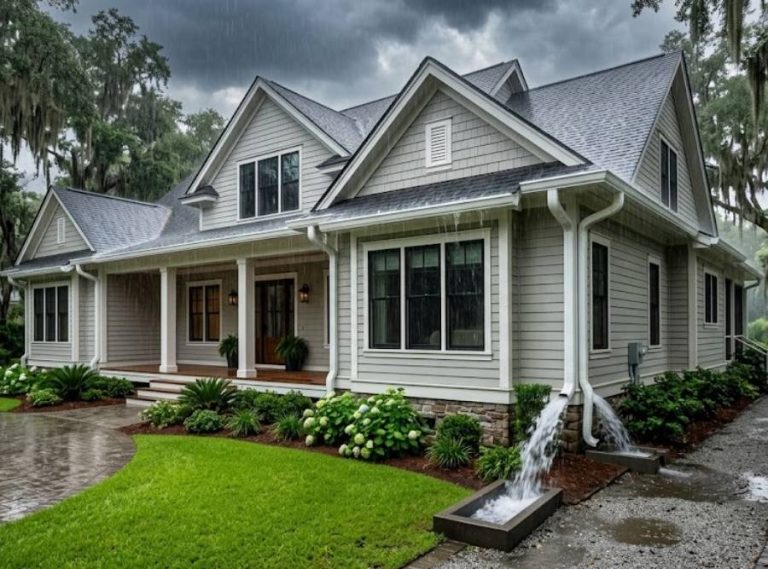
Gutters are designed to control where water goes when it leaves your roof. When they are functioning properly, rainwater is collected and directed safely away from the home through downspouts. This controlled movement prevents water from accumulating near areas that are vulnerable to damage.
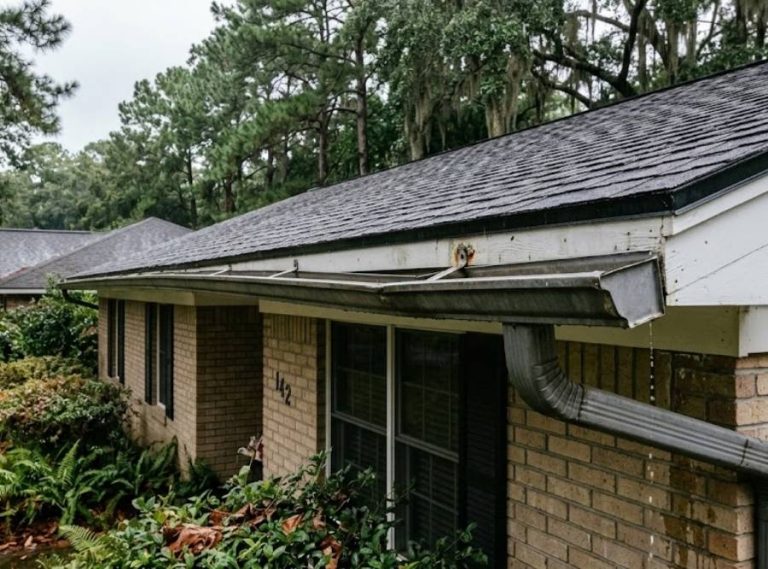
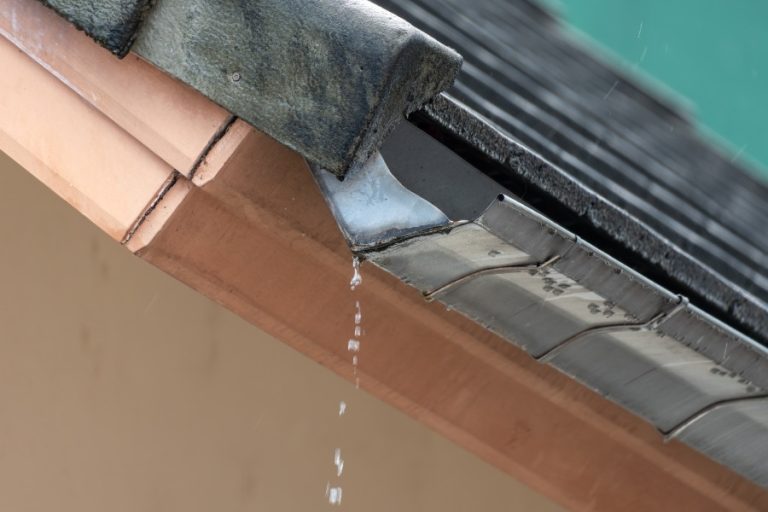
When gutters fail, however, water begins to follow its own path. It spills over edges, runs down siding, and collects near the foundation.
Over time, this repeated exposure changes how water behaves around the structure, often creating pooling areas near entry points such as garages. Once water is no longer directed properly, it rarely stays contained and begins to influence surrounding systems in subtle but impactful ways.
The Garage Is a Natural Collection Point
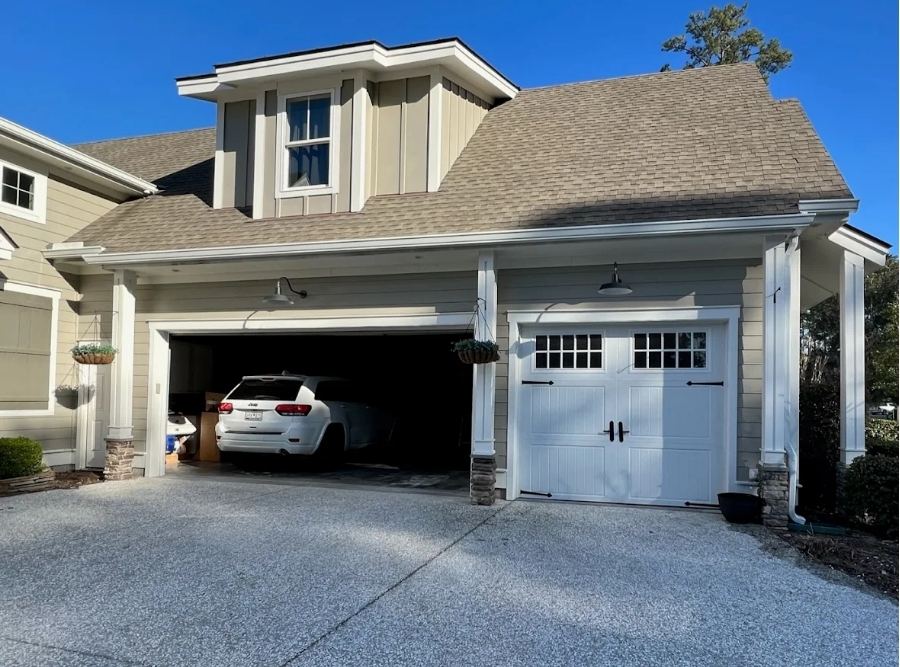
Garages are typically positioned at ground level and often follow the natural slope of a property, which makes them one of the most likely areas for water to collect when drainage is not functioning correctly. When gutters overflow or downspouts discharge too close to the home, water naturally migrates toward the lowest accessible point, which is frequently the garage.
Even small amounts of repeated exposure can begin to affect the surrounding area. Over time, this can lead to moisture intrusion, soil erosion, and even minor heaving in the surfaces around the garage. These shifts may not be immediately noticeable, but they gradually influence how the structure settles and how nearby systems perform.
Because these changes happen slowly, they are often overlooked until more obvious performance issues begin to appear.
How Gutters Affect Garage Doors
When gutters fail to properly direct water away from a home, that water collects near the garage, leading to moisture exposure, shifting surfaces, and long-term wear on door components. As conditions around the garage change, the door system is forced to operate in an environment it was not designed to handle.
Over time, this can affect alignment, sealing, and overall performance. What begins as a drainage issue can gradually turn into a mechanical problem, even though the root cause has nothing to do with the door itself.
According to Maxim Geht of Ohio Garage Door Repair, a large number of garage door issues are influenced by environmental conditions rather than the door alone. “A lot of the issues we see with garage doors are not just about the door itself. They are influenced by the conditions around it, especially moisture and drainage.”
This reinforces an important point. Garage door problems are often symptoms of larger environmental issues rather than isolated mechanical failures.
Small Drainage Issues Become Larger Problems
One of the challenges with gutter-related issues is that they tend to develop gradually.
A slight overflow, a downspout that does not extend far enough, or a section of gutter that is not pitched correctly may not seem urgent at first. However, over time, these small issues create consistent exposure to water in areas that are not designed to handle it.
This repeated exposure leads to long-term problems. Soil becomes saturated, surfaces begin to shift, and moisture starts to affect the structural support around systems like garage doors. In the field, Geht’s team often finds that recurring performance issues are connected to conditions outside the system itself rather than a single worn component, which is why addressing the source is so important.
Why Proper Gutter Installation Matters
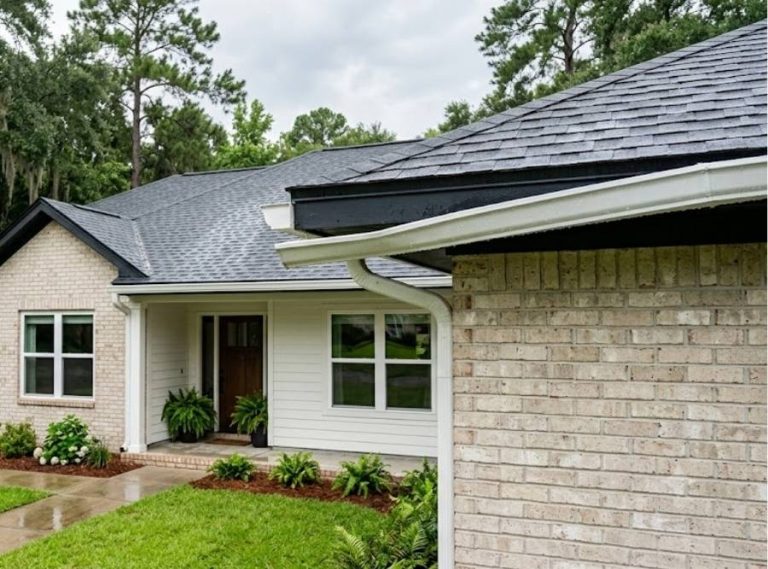
Gutters are not just an accessory. They are a core part of your home’s defense system. When installed correctly, they control the direction and flow of water, preventing it from collecting near critical areas such as the foundation and garage.
In areas like Bluffton and other regions that experience heavy rainfall or seasonal water buildup, this becomes even more important. A well-designed gutter system helps manage large volumes of water efficiently, reducing the risk of overflow and misdirection. Proper sizing, correct pitch, and routine maintenance all play a role in ensuring the system performs as intended over time.
The Overlooked Role of Downspouts
While gutters collect water, downspouts determine where it ultimately ends up. If downspouts release water too close to the home, the problem is not solved but simply relocated. Water continues to accumulate near the structure, often finding its way toward the garage and other vulnerable areas.
Extending downspouts and directing water further away from the home is one of the simplest and most effective ways to improve drainage. This small adjustment can significantly change how water behaves around the property, reducing long-term exposure and helping protect surrounding systems.
A System, Not Separate Parts
One of the most common misconceptions homeowners have is treating gutters and garage doors as unrelated systems. In reality, they are part of a larger network that determines how your home handles water, movement, and environmental stress.
When gutters fail to manage water properly, the effects spread beyond the roofline. When conditions around the garage change, the door system responds accordingly.
Understanding this connection allows homeowners to address problems at their source rather than reacting to symptoms as they appear.
What Homeowners Should Pay Attention To
There are several early signs that often indicate a connection between drainage and garage performance. Water pooling near the garage, damp or deteriorating seals, visible soil erosion, or changes in how the garage door operates can all point to underlying drainage issues.
If these signs are addressed early, they can prevent more significant problems from developing over time. Recognizing the connection between water movement and system performance is key to maintaining long-term stability.
Why It Matters More Than You Think
Gutters and garage doors may serve different functions, but they share a common purpose in protecting the home. When they are working together, water is controlled, structures remain stable, and systems perform as they should.
When they are not, small issues can grow into larger ones that affect multiple areas at once. Understanding how these systems connect gives homeowners a clearer path to maintaining their property, avoiding unnecessary repairs, and protecting long-term value.
In many homes, the issue is not where the problem appears, but how water has been moving around the structure all along.

Spartina Seamless Gutters leads the Lowcountry in custom seamless gutter fabrication, micro-mesh leaf protection, and exterior water management. Serving residential and commercial properties across Jasper and Beaufort counties, their experienced technicians deliver actionable insights on storm drainage, soffit care, and protecting your home against severe coastal weather.