What Gutter Material Holds Up Best Against Isle of Hope’s Salt Air and Humidity?
Seamless aluminum is usually the best overall gutter material for Isle of Hope homes because it balances corrosion resistance, durability, cost, and compatibility with coastal architecture. Copper can last longer and develops a protective patina, but it requires a higher investment and careful installation, while galvanized steel is generally more vulnerable to visible rust in salt-laden, humid conditions.
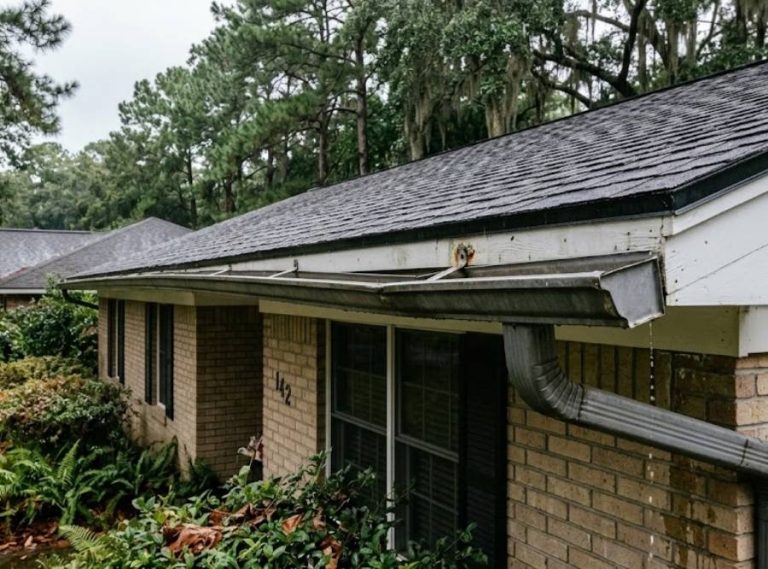
Homeowners in Isle of Hope often notice that exterior metal components seem to age faster than expected. Gutters lose their smooth finish, rust-colored streaks appear beneath screws, seams begin dripping, and paint starts bubbling around cut edges or joints. These changes are not always signs that the entire system has failed, but they do show how persistent humidity, salt carried inland from the marsh, frequent rainfall, and intense sun affect exposed materials over time.
Properties near Bluff Drive, the Isle of Hope Marina, the Skidaway River, Herb River, and other marsh-influenced areas experience more atmospheric moisture than homes farther inland. Salt particles settle on gutter surfaces, fasteners, hangers, and downspouts, where they remain until rain or maintenance removes them. When those particles combine with humidity and long drying times, they create conditions that accelerate oxidation and corrosion around scratches, seams, cut edges, and metal connections.
The material used for the gutter trough matters, but it is only one part of coastal durability. A high-quality gutter can still fail early when installed with corrodible fasteners, incompatible metals, poor sealant, insufficient hangers, or incorrect pitch. In Isle of Hope, the best-performing system is not simply made from the right metal; it is assembled as a complete coastal drainage system using compatible components.
Seamless Aluminum Is Usually the Best Overall Choice
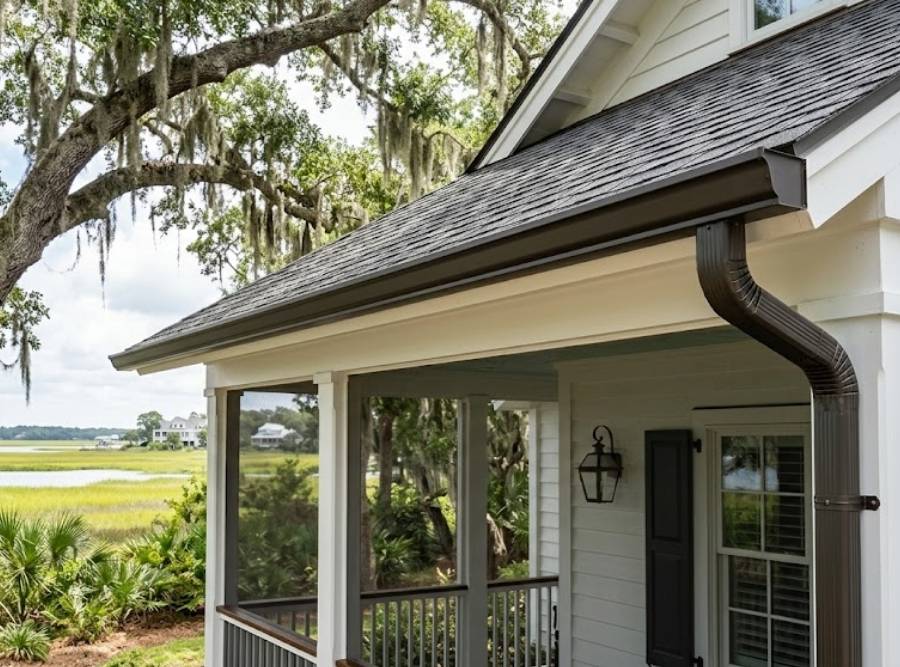
Seamless aluminum is the most practical choice for many Isle of Hope homes because aluminum does not develop red rust in the same way as untreated or poorly protected steel. It is lightweight, available in multiple thicknesses and finishes, and can be formed on-site into long continuous runs. Reducing section-to-section seams helps eliminate many of the joint failures that commonly develop in older sectional gutter systems.
Aluminum is not completely immune to coastal weathering. It can oxidize, become chalky, pit around exposed areas, and deteriorate where moisture remains trapped against the metal. White oxidation, dull finishes, bubbling paint, or dark staining around joints may indicate that the protective coating is wearing down or that standing water and debris are keeping the gutter wet for too long.
The quality of the aluminum makes a significant difference. Thin-gauge material dents, twists, and deforms more easily during storms, maintenance, or ladder contact. Once the gutter profile changes, water may collect in low sections and remain there after rainfall, increasing stress on sealants, outlets, and hidden hangers. Heavier-gauge aluminum generally provides better resistance to deformation and performs more reliably on larger homes or rooflines with concentrated valley runoff.
Factory-applied finishes also help protect aluminum from direct exposure. A durable coating reduces oxidation, improves appearance, and provides an additional barrier against salt deposits and moisture. However, cut edges, drilled holes, scratches, and field-fabricated corners remain vulnerable, which is why workmanship and maintenance are just as important as the original finish.
Copper Offers Exceptional Longevity but Requires Proper Planning
Copper is one of the longest-lasting gutter materials available and is often selected for historic residences, waterfront homes, and high-end renovations throughout Isle of Hope. Unlike galvanized steel, copper does not rely on a painted surface to prevent traditional rust. It gradually develops a patina that changes the appearance of the metal while helping protect the material beneath it.
The green or blue-green staining associated with aging copper is not usually evidence that the gutter is rotting away. Patina is a natural surface reaction that develops as copper interacts with air and moisture. Many homeowners choose copper specifically because of this evolving appearance, especially on Victorian, Colonial Revival, Lowcountry, and historic waterfront architecture.
Copper’s durability does not mean it can be installed without special attention. It should be paired with compatible fasteners, hangers, solder, and connecting materials. Direct contact between copper and certain other metals can create galvanic corrosion, causing the less noble metal to deteriorate rapidly. Runoff from copper components can also stain masonry, siding, roofing, or painted surfaces if discharge paths are not considered carefully.
Cost is the main reason copper is not the default choice for every home. The material and specialized labor are significantly more expensive than standard seamless aluminum. For homeowners who value longevity, architectural character, and long-term performance, copper may justify that investment, but the entire system must be designed and installed specifically for the material.
Galvanized Steel Is Strong but More Vulnerable to Coastal Rust
Galvanized steel gutters are structurally strong and resistant to denting, which can make them appealing for homes exposed to branches, storm debris, or physical impact. Their durability depends on a protective zinc coating that separates the underlying steel from moisture and oxygen. Once that coating is scratched, cut, or worn away, the exposed steel can begin developing visible red rust.
Salt air and humidity make this process more aggressive. Corrosion often begins around seams, screws, outlet openings, cut edges, and areas where debris holds moisture against the surface. A small orange spot may remain cosmetic for a time, but it can gradually spread beneath the finish and weaken the surrounding material.
Steel gutters also place more weight on fascia and fasteners than aluminum systems. This does not make steel unsuitable by itself, but it increases the importance of solid fascia, close hanger spacing, and corrosion-resistant attachment hardware. If the support system begins weakening, the added weight of wet debris and standing water can accelerate sagging or separation.
For many Isle of Hope properties, galvanized steel requires more careful maintenance than aluminum to remain dependable. Homeowners should inspect coating damage, rust around fasteners, peeling paint, and interior corrosion before small defects become pinholes or structural weaknesses. Steel may perform well when properly coated and maintained, but it is generally less forgiving in a humid, salt-influenced setting.
Galvalume and Specialty Steel Systems Need Careful Evaluation
Galvalume steel uses a coating that combines aluminum, zinc, and silicon to improve corrosion resistance compared with conventional galvanized steel. It is commonly associated with roofing and certain architectural drainage applications. In the right system, it can provide good durability, but its performance depends on coating quality, fabrication methods, cut-edge protection, and compatible accessories.
Homeowners should not assume that every product marketed as coated steel offers the same coastal lifespan. Low-quality finishes, field cuts, scratched surfaces, and incompatible fasteners can still become corrosion points. Sealants and expansion details must also accommodate the movement of long metal runs under Isle of Hope’s strong sun and warm temperatures.
Specialty materials should be considered in the context of the entire property rather than chosen solely from a product label. Roof material, architecture, expected runoff, visual preferences, budget, and maintenance expectations all influence whether a particular system is appropriate. A material that performs well in one coastal application may be less practical on a roofline with complex valleys, limited drainage access, or extensive tree debris.
Fasteners Often Corrode Before the Gutter Trough
Many coastal gutter failures begin with the hardware rather than the visible gutter body. Steel screws, spikes, hangers, brackets, and downspout straps may corrode faster than the aluminum or copper they support. Orange streaks beneath fasteners, loose brackets, backed-out screws, and sagging corners often indicate that these smaller components are losing strength.
Stainless steel fasteners are commonly preferred in coastal environments because they provide better corrosion resistance than basic steel hardware. The grade and compatibility still matter, especially where different metals touch one another. Installing a corrosion-resistant gutter with inexpensive or incompatible screws can undermine the lifespan of the entire system.
Hidden hangers should also be spaced appropriately for the roof size and expected rainfall. Wide spacing places more stress on each connection and allows the gutter to flex between supports. During heavy storms, the combined weight of water and wet live oak debris can expose weak hardware quickly.
Replacing isolated fasteners may extend the system’s life when the gutter and fascia remain sound. If corrosion is widespread or the attachment points have damaged the fascia, simply installing new screws may provide only temporary improvement. The supporting wood and gutter alignment should be evaluated before hardware is replaced.
Mixed Metals Can Create Galvanic Corrosion
Galvanic corrosion occurs when dissimilar metals are placed in contact while moisture acts as an electrolyte. Isle of Hope’s humid, salt-influenced conditions make this reaction particularly relevant because surfaces remain damp for extended periods. One metal may begin deteriorating faster as the electrochemical reaction progresses.
This problem often appears after repairs completed with whatever screws, patches, or connectors were available. A copper gutter may be attached with unsuitable hardware, or an aluminum downspout may be connected to a metal component that reacts poorly with it. The repair can look successful initially while corrosion develops around the connection.
Compatible materials should be used throughout the trough, hangers, fasteners, outlets, elbows, and downspouts. Where different metals cannot be avoided, they may need to be isolated with appropriate barriers or specialized connection methods. Coastal durability depends on these details because corrosion frequently begins in places that are hidden from normal ground-level view.
Homeowners should be cautious about assuming that a thicker gutter automatically prevents this type of failure. Material thickness improves strength, but it does not stop electrochemical reactions around incompatible connections. Correct material pairing is essential regardless of the gutter gauge.
Seamless Construction Reduces Vulnerable Joints
Older sectional gutters contain multiple seams along each run, and every seam represents another location where sealant can shrink, crack, or separate. Repeated expansion and contraction place stress on these joints, while trapped debris and standing water keep them exposed to moisture. In coastal conditions, leaks often begin at seams before the metal itself reaches the end of its useful life.
Seamless gutters are formed in continuous lengths to fit the structure, reducing the number of joints across straight roof edges. They still require connections at corners, end caps, and downspout outlets, but eliminating unnecessary intermediate seams improves reliability. This is particularly beneficial on long rooflines where repeated joints would otherwise create multiple maintenance points.
Proper pitch remains essential even with seamless construction. Water that stays inside the gutter after a storm increases internal moisture exposure and accelerates coating wear, oxidation, and sealant deterioration. A seamless run installed without adequate slope can deteriorate faster than a properly pitched sectional system.
Corner fabrication and sealing also determine how well the system performs. Miters experience movement, concentrated runoff, and frequent exposure to trapped debris. High-quality materials cannot compensate for poorly fitted or inadequately sealed corners.
Tree Coverage Can Shorten the Life of Any Gutter Material
Isle of Hope’s live oaks, pines, and dense coastal vegetation contribute to the community’s character, but they also place constant demands on gutter systems. Leaves, Spanish moss, pine needles, seeds, and pollen accumulate inside gutters and around outlets. When this material becomes wet, it holds moisture against metal surfaces and reduces drying between storms.
Copper, aluminum, and coated steel all perform better when organic debris is removed consistently. Even highly corrosion-resistant materials can develop sealant problems, staining, standing water, and attachment stress when gutters remain clogged. Wet debris also adds weight and may shift water toward weak corners or low sections.
Gutter guards can reduce larger debris, but they do not eliminate maintenance. Fine pollen, roof granules, small leaves, and salt residue may still collect on or beneath the guard system. Waterfront and heavily wooded homes often need more frequent inspection regardless of the gutter material selected.
Material choice should therefore reflect the homeowner’s realistic maintenance plan. A durable system that receives regular cleaning and inspection will usually outperform a premium material that is neglected for years. Coastal longevity depends on both the metal and the conditions inside the gutter.
The Best Material Depends on More Than Corrosion Resistance
Corrosion resistance is important, but it is not the only factor that determines the best gutter material for an Isle of Hope home. The system must also handle roof runoff, resist deformation, complement the architecture, attach securely to the fascia, and fit the owner’s maintenance expectations. Budget and long-term plans for the property also influence whether aluminum, copper, or another material provides the best value.
For most homes, heavier-gauge seamless aluminum with a quality factory finish, compatible hardware, and proper installation offers the strongest combination of performance and affordability. Copper is an excellent premium option for historic or high-end homes where longevity and appearance justify the added cost. Steel systems may still be appropriate in selected applications, but they require close attention to coatings and corrosion in the local environment.
The decision should be made after evaluating the roofline, valleys, existing fascia, tree coverage, salt exposure, and discharge layout. A marsh-front home near Bluff Drive may experience different conditions than an interior property closer to Skidaway Road or Sandfly. Local exposure can vary even within a relatively small area.
Choosing the right material is therefore not about finding a product that is completely salt-proof or maintenance-free. No gutter system is immune to coastal weathering. The objective is to select a material and installation method that can manage Isle of Hope’s environment predictably while remaining practical to inspect, clean, and repair.
Coastal Gutter Longevity Depends on Installation Quality
The best gutter material can still perform poorly when installation details are overlooked. Coastal durability begins with correct sizing, proper pitch, secure hanger spacing, sealed miters, and compatible fasteners. A seamless aluminum gutter installed with low-quality screws or poor slope may begin leaking and sagging long before the aluminum itself reaches the end of its service life.
Roof geometry also matters. Valleys, steep roof sections, and large upper-story surfaces can send substantial water into a short section of gutter during an Isle of Hope thunderstorm. If that flow is concentrated into too few outlets, water may stand inside the trough or spill over the edge. Persistent standing water keeps seams and coatings wet longer, increasing wear even on materials that resist corrosion well.
The fascia must be evaluated before new gutters are installed. Rotten or moisture-damaged wood cannot hold hidden hangers securely, regardless of the gutter material selected. Attaching a premium system to weakened fascia may produce loose sections, shifting pitch, and eventual separation from the house. Repairing the support structure first allows the new gutters to perform as designed.
Maintenance Is Still Necessary With Corrosion-Resistant Gutters
Homeowners sometimes interpret corrosion resistance as maintenance-free performance. Aluminum and copper generally handle Isle of Hope’s environment better than ordinary galvanized steel, but both still benefit from regular cleaning and inspection. Salt residue, wet leaves, pollen, and roofing debris can remain inside the gutter and create areas of prolonged moisture exposure.
Routine washing can help remove salt deposits from exterior surfaces, especially on waterfront or marsh-adjacent properties. This does not require aggressive pressure washing, which may damage finishes or force water behind the gutter. A gentle rinse during normal exterior maintenance can reduce the amount of salt and organic residue remaining on the metal.
The interior of the gutter deserves equal attention. Debris trapped near outlets creates standing water and increases strain on sealants, hangers, and end caps. Even if the metal does not rust through, the added weight can change the gutter’s pitch and cause water to collect in new areas. Cleaning therefore protects both the material and the structural alignment of the system.
Gutter Guards Help With Debris but Do Not Stop Salt Exposure
Gutter guards can reduce the volume of live oak leaves, pine needles, and larger debris entering a gutter. This can be valuable on properties near Bluff Drive, LaRoche Avenue, Parkersburg Road, or other tree-lined areas of Isle of Hope. Reducing wet organic buildup allows the gutter to drain and dry more efficiently between storms.
However, guards do not seal the gutter from the coastal environment. Fine pollen, dust, roof granules, seed material, and salt residue can still pass through openings or collect on the guard surface. If the guard becomes coated with organic matter, water may overshoot the gutter or flow more slowly into the trough.
The guard material and attachment method must also be compatible with the gutter. Mixing metals carelessly can create corrosion at screws, clips, or contact points. A guard that requires repeated drilling into the gutter can introduce exposed edges and new locations for finish damage. The full system should be considered before a guard product is added.
Early Oxidation Does Not Always Mean Immediate Replacement
White chalky residue on aluminum often causes concern because homeowners assume the gutter is rusting. Aluminum does not develop the same red rust as steel, but it can oxidize when exposed to air, moisture, and salt. Minor surface oxidation may be cosmetic, while pitting, thinning metal, bubbling finishes, or leaks indicate more advanced deterioration.
Copper also changes appearance without necessarily losing structural strength. Its gradual darkening and green patina are expected parts of the aging process. Uneven staining may appear where runoff patterns or environmental exposure differ, but color change alone does not mean the copper has failed.
A professional evaluation should distinguish between cosmetic aging and functional damage. Gutters may still have years of useful service if they remain securely attached, correctly pitched, and free of holes or widespread joint failure. Replacement becomes more appropriate when corrosion has weakened the trough, fasteners, hangers, or multiple connections.
Patching Works Best When Corrosion Is Isolated
Small leaks at end caps, miters, or outlet connections can sometimes be repaired without replacing the entire gutter system. The damaged area must be cleaned, dried, and evaluated before new sealant is applied. Applying sealant over salt residue, active corrosion, or wet surfaces often leads to another leak after only a short period.
Pinhole leaks may also be repairable when the surrounding metal remains solid. However, several pinholes along the same run usually indicate broader material deterioration rather than isolated damage. Covering each hole may delay replacement briefly, but it does not restore the strength of thinning metal.
Fastener replacement can provide meaningful improvement when the gutter body and fascia are still sound. Corroded screws or hangers should be replaced with compatible components designed for the coastal setting. If the attachment points have enlarged or the fascia has softened, new hardware alone may not remain secure.
Painting Over Rust Rarely Stops Active Steel Corrosion
Applying rust-inhibiting paint can help protect properly prepared steel, but simply covering visible rust is not a lasting repair. Loose corrosion, flaking coating, and salt residue must be removed before a new finish is applied. Otherwise, deterioration continues beneath the paint and eventually causes bubbling or peeling.
Cut edges and fastener holes require particular attention because they expose the underlying steel. A gutter may look acceptable across the main surface while rust spreads around miters, downspout outlets, and hanger connections. These areas experience both moisture and physical stress, which can accelerate failure.
Repeated repainting may no longer be practical once corrosion has reached multiple parts of the system. At that stage, replacement with seamless aluminum or properly designed copper may provide better long-term value than continuing to patch steel. The decision should consider the condition of the fascia and downspouts as well as the visible gutter trough.
Loose Gutters Can Become a Safety Concern During Storms
Corroded hardware and weakened fascia affect more than drainage performance. A gutter holding water and wet debris can become extremely heavy, particularly along long rooflines. If hangers or screws have lost strength, the system may pull away from the building during heavy rain or strong coastal winds.
A partially detached gutter can direct large volumes of water onto entrances, walkways, siding, and landscaping. Loose metal sections may also shift or fall during a storm, creating a risk to people and property below. These conditions deserve immediate attention rather than another temporary sealant repair.
Sagging corners, visible gaps behind the gutter, and fasteners backing out are signs that the support system is deteriorating. The problem may originate in corroded hardware, damaged fascia, inadequate hanger spacing, or a combination of all three. Restoring safe attachment often requires more than tightening the existing screws.
Delaying Replacement Can Increase the Scope of Damage
Early corrosion may be limited to a few fasteners, a leaking corner, or a short damaged section. Addressing those issues promptly can prevent water from remaining against the fascia or bypassing the gutter during storms. When deterioration is ignored, leaking water begins affecting surrounding materials and expands the eventual repair.
Wet fascia may soften and lose its ability to hold hangers. Moisture can also reach soffits, exterior trim, siding, and roof-edge components. Once these materials begin deteriorating, gutter replacement becomes only one part of a larger restoration project.
Uncontrolled runoff creates additional problems at ground level. Water may erode planting beds, saturate soil beside the foundation, or contribute to crawl space moisture. A corroded gutter that appears to be an exterior cosmetic issue can therefore become a broader water-management problem if it is left in service too long.
Aluminum and Copper Serve Different Priorities
Seamless aluminum remains the most practical recommendation for the majority of Isle of Hope homes. It offers strong coastal performance, broad color availability, relatively low weight, and a cost that fits most replacement projects. When paired with stainless or otherwise compatible hardware and a quality finish, it can provide dependable service without the maintenance concerns associated with ordinary steel.
Copper serves a different homeowner and architectural goal. It provides exceptional longevity and a distinctive appearance that complements historic cottages, Victorian homes, Colonial Revival properties, and custom waterfront residences. Its higher price reflects both the material and the specialized workmanship required to install it correctly.
The choice is not simply between a good material and a better one. Aluminum often provides the best overall value, while copper may provide the best premium lifespan and architectural character. The right decision depends on the home, budget, exposure, and how long the owner plans to keep the property.
How Isle of Hope Exposure Changes the Recommendation
A home overlooking the Skidaway River or located close to the marsh may experience heavier salt aerosol exposure than an interior property near Skidaway Road. Waterfront wind carries moisture and salt particles directly onto exterior metal surfaces. These homes may benefit from more frequent rinsing, closer inspections, and careful hardware selection.
Tree coverage creates another layer of exposure. Homes beneath mature live oaks often deal with constant leaves, Spanish moss, pollen, and fine organic debris. This material can remain wet inside the gutter and create a more aggressive environment than salt air alone. A highly corrosion-resistant material still needs sufficient capacity and routine cleaning in these locations.
Roof size and design may also affect material gauge and hanger spacing. Large custom homes, multiple valleys, and long gutter runs place greater structural demands on the system. The material should be selected alongside the correct profile, thickness, outlet layout, and support system rather than as an isolated product choice.
What to Look for When Comparing Coastal Gutter Quotes
A low estimate may focus only on the gutter trough while leaving important system details unspecified. Homeowners should understand what material thickness is being used, whether the gutters will be seamless, what type of hangers and fasteners are included, and how corners and end caps will be fabricated. These details have a direct effect on coastal lifespan.
The quote should also address downspout sizing and placement. Durable gutters cannot protect the home if the outlets are too small or the downspouts discharge water into vulnerable areas. Roof valleys, long runs, and lower roof sections should be evaluated to determine where additional capacity may be necessary.
Existing fascia conditions should not be ignored. Installing over damaged wood may reduce the price initially, but it can lead to attachment failure and another repair soon afterward. A thorough proposal should identify visible support problems and explain whether repairs are needed before the new system is installed.
The Best Coastal Gutter System Is More Than a Metal Choice
For most Isle of Hope homes, heavier-gauge seamless aluminum is the strongest overall choice for resisting humidity and salt exposure while keeping installation and future repairs practical. Copper is the leading premium option where long-term durability, historic character, and appearance justify the higher cost. Galvanized steel can perform in selected applications, but its protective coating and fasteners require more attention in the local environment.
No material is entirely salt-proof, humidity-proof, or maintenance-free. Long-term performance depends on compatible hardware, correct pitch, secure attachment, adequate outlet capacity, routine debris removal, and attention to early signs of corrosion. A poorly designed premium system can fail sooner than a well-installed aluminum system built for the property’s actual roof and exposure.
At Spartina Seamless Gutters, we evaluate the full roof drainage system before recommending a material. We consider the home’s architecture, marsh exposure, tree coverage, fascia condition, roof valleys, runoff volume, and maintenance needs so the finished system is suited to Isle of Hope’s coastal conditions. The goal is not simply to install gutters that look new, but to create a drainage system that continues protecting the home through years of humidity, salt air, thunderstorms, and tropical weather.