Is My Ridgeland Property in a Flood Zone, and Does That Affect My Gutter/Drainage Setup?
Yes, a property’s flood zone can influence how water behaves around your home, but it does not automatically determine whether your gutter or drainage system is adequate. In Ridgeland, proper gutters, correctly placed downspouts, and effective site drainage are essential for every property because they manage roof runoff, even if the home is outside a mapped flood zone.
Many homeowners begin asking about flood zones after noticing standing water in the yard, a damp crawl space, or water collecting near the foundation after heavy rain. It’s easy to assume that these problems must mean the property sits within a flood-prone area, especially when several neighboring yards appear to experience similar conditions after a storm. While flood zone designations are certainly important for understanding long-term flood risk and insurance requirements, they do not tell the entire story of how rainwater behaves on an individual property.
Every home in Ridgeland has to manage two different sources of water. The first is regional stormwater, which includes rainfall, nearby wetlands, drainage ditches, natural waterways, and broader floodplain conditions. The second is roof runoff—the thousands of gallons of water that your own roof collects and concentrates into gutters and downspouts during every significant storm. Even if your home is located well outside a designated flood zone, improperly managed roof runoff can still create foundation moisture, crawl space problems, landscape erosion, and persistent standing water around the structure.
Throughout Ridgeland, from the older neighborhoods surrounding Main Street to newer developments along Highway 278 and the growing communities toward Beaufort County, we often see homeowners focus on the flood map while overlooking the drainage system attached to their own home. In many cases, improving how roof runoff is handled can significantly reduce localized water problems regardless of the property’s official flood designation.
Being in a Flood Zone Doesn’t Automatically Mean Your Gutters Need to Be Different
One of the most common misconceptions is that homes located within or near a mapped flood zone automatically require a completely different gutter system. In reality, flood zones and gutters serve different purposes. Flood zone designations describe the likelihood of flooding from larger bodies of water or widespread storm events, while gutters are responsible for collecting water from the roof and directing it safely away from the structure.
A properly designed gutter system should perform effectively whether a home sits inside or outside a mapped floodplain. What changes is how important it becomes to manage every gallon of roof runoff as efficiently as possible when the surrounding ground is already prone to becoming saturated. During periods of prolonged rainfall, soils may hold moisture much longer than usual, reducing their ability to absorb additional water discharged from downspouts. If those downspouts empty directly beside the foundation or into areas where drainage is already slow, the property can experience localized flooding even though the gutter system itself is technically functioning.
This distinction is important because replacing gutters alone rarely solves broader site drainage issues. Likewise, correcting yard drainage without addressing undersized gutters, overflowing roof valleys, or poorly placed downspouts may leave the home exposed to many of the same moisture problems. The goal is not simply to move water off the roof. The goal is to move it far enough away from the home that it can safely disperse without creating additional problems.
Why Ridgeland’s Flat Terrain Makes Drainage More Important
One characteristic that influences drainage throughout much of Ridgeland is the area’s relatively flat Lowcountry terrain. Unlike homes built on steep hillsides where gravity quickly carries water away, many properties in Jasper County experience much slower surface drainage after heavy rainfall. Water naturally seeks the lowest point available, and when there is very little elevation change across a lot, it often remains on the surface longer than homeowners expect.
This becomes even more noticeable after consecutive days of rain or during tropical weather systems. Once the soil becomes saturated, every additional inch of rainfall has fewer places to go. Roof runoff discharged from gutters adds to that water volume, particularly around homes with large roof surfaces that collect substantial amounts of rainfall during storms. Without thoughtful drainage planning, water may repeatedly collect near foundations, crawl space vents, sidewalks, driveways, or landscape beds simply because the surrounding ground cannot move it away quickly enough.
Certain properties are naturally more susceptible than others. Homes located near wetlands, lower elevations, drainage easements, or areas with slower natural runoff often experience standing water longer after storms. Likewise, mature tree root systems can gradually alter the way water flows across a yard, while decades of soil settlement around older homes may create subtle low spots that slowly redirect runoff back toward the structure instead of away from it.
These conditions do not necessarily indicate that something is wrong with the gutter system itself. Instead, they illustrate why gutters and site drainage must work together rather than being treated as separate systems.
Your Gutters May Be Working Correctly While Your Property Still Has a Drainage Problem
A homeowner watching water collect around the house often assumes the gutters must be clogged or failing. Sometimes that is exactly the problem, but not always. In many situations, the gutters are successfully collecting water from the roof and delivering it to the downspouts exactly as intended. The difficulty begins after the water leaves the downspout.
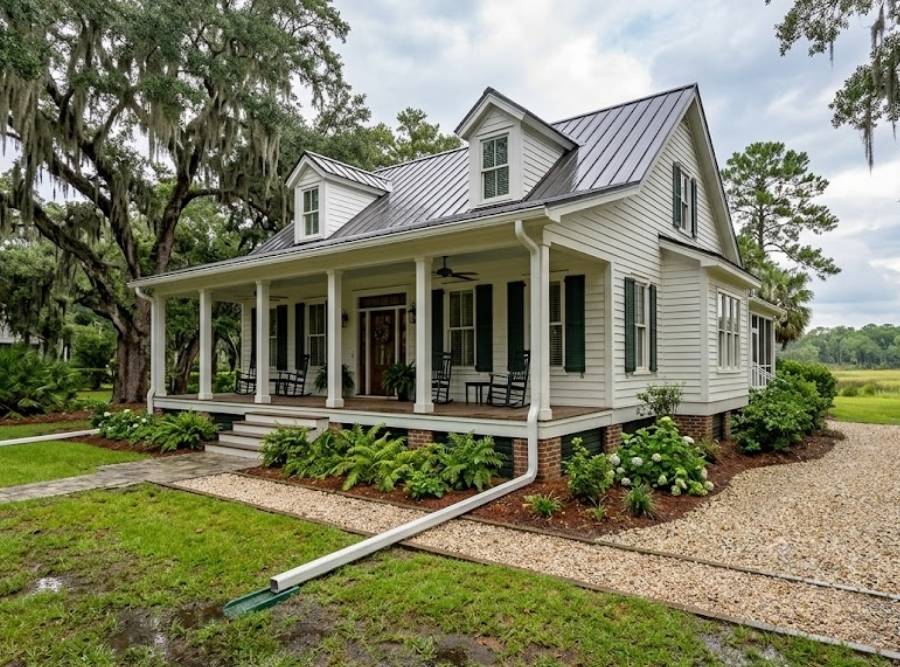
If the discharge point sits only a short distance from the foundation, thousands of gallons of roof runoff may repeatedly soak the same section of soil throughout the year. During dry conditions, that moisture may disappear without much concern. During Ridgeland’s frequent thunderstorms or prolonged wet periods, however, the surrounding ground may already be saturated before additional runoff arrives. The result is standing water, muddy landscaping, crawl space humidity, and gradual erosion that homeowners naturally associate with flooding.
This is why simply observing water pooling near the home does not automatically mean larger gutters are required. The real issue may involve short downspout extensions, improper grading, blocked drainage pathways, or runoff being concentrated into one location rather than distributed safely across the property. Understanding where the water travels after leaving the gutter system is often just as important as understanding how it reaches the gutters in the first place.
The Earliest Warning Signs Often Appear Long Before Flooding Becomes Serious
Most drainage problems develop gradually rather than overnight. Long before water begins entering a crawl space or approaching the home’s interior, subtle warning signs often suggest that the property is struggling to manage rainfall effectively. Paying attention to these early indicators can prevent much more expensive moisture problems later.
Homeowners may first notice mulch repeatedly washing away beneath one downspout after every heavy rain. Others observe grass remaining soggy for several days while neighboring yards dry much more quickly. Water stains may begin appearing along foundation walls, algae can develop near constantly damp areas, and small puddles that once disappeared within a few hours may gradually remain for an entire day or longer. Some homeowners notice increased humidity inside their crawl space, while others discover mosquitoes gathering around standing water that seems to linger after every storm.
These changes often occur so gradually that they become part of the normal appearance of the property. Unfortunately, they usually indicate that runoff is no longer being managed as effectively as it should be. Whether the cause is clogged gutters, undersized downspout extensions, settled grading, or saturated soils, identifying these early warning signs allows homeowners to address the root cause before persistent moisture begins affecting the structure itself.
Why Bigger Gutters Alone Rarely Solve Flooding Problems
When homeowners begin experiencing persistent drainage issues, one of the first questions they ask is whether installing larger gutters will solve the problem. While upgrading from an undersized gutter system can certainly improve roof runoff management on some homes, it is important to understand what gutters are actually designed to do.
Gutters collect water from the roof and move it efficiently toward the downspouts. They are not intended to solve site drainage deficiencies, correct poor grading, or eliminate flooding caused by saturated ground. If water is leaving the gutters exactly as intended but is being discharged into an area where it cannot drain away, increasing the size of the gutter system simply delivers more water to the same problem area.
This is why every drainage evaluation should look beyond the roofline. We examine how runoff travels from the roof to the gutter, through the downspouts, across the landscape, and ultimately away from the home’s foundation. Sometimes the solution involves improving the gutter system itself. Other times, the gutters are performing well, but the property needs better runoff distribution through longer downspout extensions, grading improvements, swales, area drains, or other drainage measures that help water continue moving away from the structure.
Looking at only one part of the system often leads to unnecessary work while leaving the real source of the problem untouched.
How Gutters and Site Drainage Work Together
One of the easiest ways to understand the relationship between gutters and drainage is to think of them as consecutive parts of the same water-management system rather than separate home components. The gutters manage the water while it is still on the roof. The drainage system manages it once it reaches the ground. If either part struggles, the entire system becomes less effective.
A properly functioning gutter system collects runoff from every roof slope, directs it toward strategically placed downspouts, and prevents water from spilling directly beside the home. From there, the property’s grading and drainage features take over. Positive grading encourages water to flow away from the foundation, while swales, catch basins, French drains, or properly placed discharge areas help distribute that water without allowing it to collect in vulnerable locations.
Problems develop when one stage overwhelms the next. A downspout that empties beside the foundation places unnecessary stress on the surrounding soil. Likewise, excellent grading cannot compensate for gutters that repeatedly overflow because of debris accumulation or insufficient capacity. Every component relies on the next one performing correctly.
This comprehensive approach becomes particularly valuable throughout Ridgeland because many homes experience periods of intense rainfall associated with tropical systems, afternoon thunderstorms, and extended wet seasons. During these events, every part of the runoff management system must function together if the property is going to handle the additional water effectively.
The Most Common Drainage Mistakes We See Around Ridgeland
Many drainage problems begin with good intentions. Homeowners notice standing water and try to improve the situation themselves, but without understanding how the entire property manages runoff, one small change can unintentionally create a new problem elsewhere.
A common example involves extending a downspout without considering where the water will ultimately discharge. Redirecting runoff away from one corner of the home is beneficial only if the new location allows water to continue moving safely away from the structure. Otherwise, it may simply transfer the standing water problem to another area of the yard, a detached garage, a neighboring property, or an area where erosion becomes even more severe.
We also see homeowners add soil to eliminate low spots without evaluating the overall grading. While filling depressions may temporarily hide standing water, adding soil too close to siding or crawl space vents can create moisture problems that did not previously exist. Likewise, installing underground drain pipes without adequate slope or long-term maintenance often results in systems that clog internally and become difficult to inspect.
Another common mistake is focusing exclusively on visible gutters while overlooking the downspouts. A gutter trough may appear perfectly clean, but if the downspout or underground discharge point is partially obstructed, water still cannot leave the system efficiently during heavy rainfall. The result looks very similar to a clogged gutter even though the blockage exists farther downstream.
Successful drainage improvements begin by identifying where the water originates, where it travels, and where it ultimately needs to go rather than attempting isolated fixes one at a time.
Flood Maps Are Important, but They Don’t Replace a Property Evaluation
Flood maps serve an important purpose by identifying areas with increased flood risk, helping homeowners understand insurance requirements, construction considerations, and regional flooding potential. However, they should not be used as the sole indicator of whether a property’s drainage system is functioning properly.
Two neighboring homes within the same flood zone can perform very differently depending on their grading, roof design, landscaping, gutter configuration, and drainage improvements. Likewise, two homes outside a mapped floodplain can experience completely different moisture issues because one directs roof runoff well away from the foundation while the other repeatedly saturates the same section of soil after every storm.
This distinction is especially important for homebuyers. Purchasing a property outside a designated flood zone does not guarantee that localized drainage concerns are absent. During inspections, it is worthwhile to observe the condition of the gutters, evaluate where the downspouts discharge, look for evidence of repeated erosion or standing water, and inspect crawl spaces for signs of excessive moisture. These observations often provide valuable insight into how the property performs during heavy rainfall regardless of its flood zone classification.
The goal is not simply determining whether flooding is possible. It is understanding whether the home’s own drainage system is helping or contributing to the moisture conditions already present on the site.
Protecting Your Home Means Managing Water From the Roof to the Property Line
Asking whether your Ridgeland property is located in a flood zone is an excellent place to begin, but it should not be the final question. The more important consideration is how effectively your home manages the water that falls on it every time it rains. Even properties outside mapped floodplains can experience serious moisture problems if roof runoff is concentrated near the foundation, grading directs water toward the structure, or drainage pathways become overwhelmed during heavy storms.
A well-designed gutter system is one part of a much larger water-management strategy. When gutters, downspouts, grading, and site drainage all work together, they reduce stress on the foundation, help protect crawl spaces from excess moisture, minimize erosion, and move water safely away from the home despite Ridgeland’s frequent thunderstorms and humid Lowcountry climate.
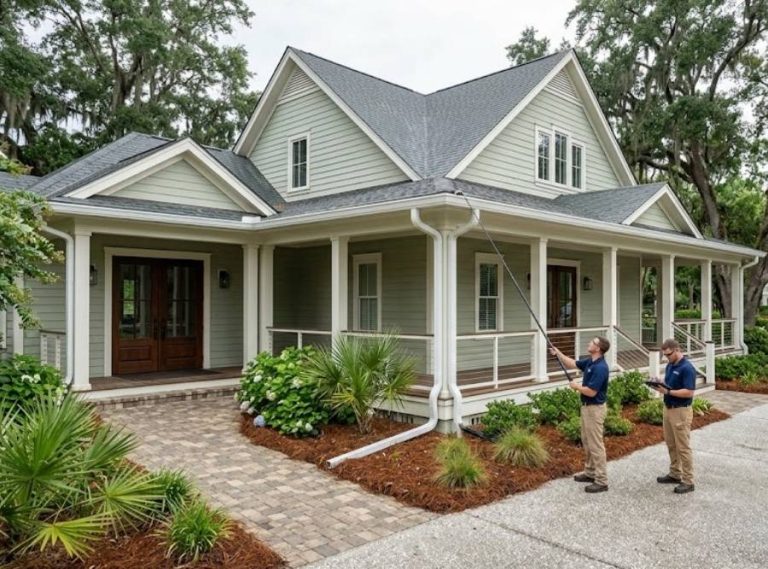
At Spartina Seamless Gutters, we don’t look only at the gutters themselves. We evaluate how the entire roof drainage system interacts with your property because solving water problems often requires understanding what happens after the water leaves the roof. Whether you’re preparing for hurricane season, purchasing a home, or trying to determine why your yard remains wet after every storm, identifying the root cause is the first step toward a lasting solution.
If you’ve noticed standing water around your foundation, recurring crawl space moisture, overflowing gutters, or drainage issues after heavy rain, Spartina Seamless Gutters can inspect your gutter system and roof runoff patterns to help determine whether the issue involves the gutters, the property’s drainage, or a combination of both.

Spartina Seamless Gutters leads the Lowcountry in custom seamless gutter fabrication, micro-mesh leaf protection, and exterior water management. Serving residential and commercial properties across Jasper and Beaufort counties, their experienced technicians deliver actionable insights on storm drainage, soffit care, and protecting your home against severe coastal weather.