How Often Should Commercial Gutters Be Inspected for Liability Near I-16 in Bloomingdale?
Commercial gutters should generally be inspected at least twice a year and after major storms, but buildings near I-16 in Bloomingdale often benefit from more frequent evaluations because of heavy rainfall, wind-driven debris, high humidity, and large roof drainage volumes. Regular inspections help identify drainage problems before they create slip hazards, water intrusion, structural damage, tenant complaints, or costly liability issues.
Many business owners and property managers assume commercial gutter inspections are simply another form of gutter cleaning. In reality, an inspection is intended to evaluate the entire roof drainage system and determine whether it is still managing rainwater safely and efficiently. A commercial building may have clean gutters yet still experience overflowing entrances, blocked roof drains, deteriorating sealants, loose hangers, or failing downspouts that create problems long before anyone notices visible damage. Identifying these conditions early allows maintenance to remain planned and predictable rather than becoming an emergency after the next heavy storm.
For commercial properties throughout Bloomingdale, proper drainage affects much more than the roofline. Overflowing gutters can send water across customer walkways, loading docks, parking areas, landscaped beds, and building foundations. Water that repeatedly runs behind the gutter can begin deteriorating fascia boards, staining exterior walls, and allowing moisture to enter the building envelope. By the time interior leaks, mold, or damaged finishes appear, the drainage issue has often been developing for months or even years.
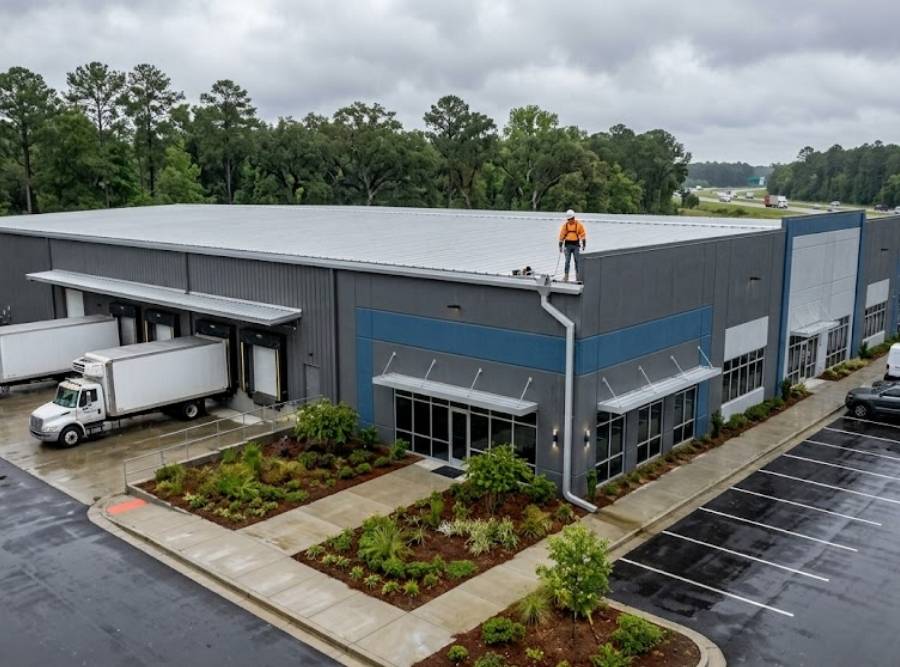
Buildings located near Interstate 16 frequently experience additional environmental stress compared to smaller residential properties. Warehouses, retail centers, office buildings, and industrial facilities typically have expansive roof surfaces that collect enormous amounts of rainwater during Georgia’s frequent thunderstorms. Combined with airborne dust from nearby traffic, seasonal pollen, pine needles, and wind-driven debris, even a partially restricted drainage system can become overwhelmed much sooner than many owners expect.
The Right Inspection Schedule Depends on the Property, Not Just the Calendar
There is no universal inspection schedule that applies equally to every commercial building. While twice-yearly inspections are often considered a practical minimum, the appropriate frequency depends on the building’s size, roof design, surrounding environment, and how much exposure the property has to customers, tenants, or employees. A shopping center with multiple storefront entrances presents different drainage concerns than a warehouse with several loading docks, while an office building surrounded by mature trees requires different maintenance than a newer industrial facility in a more open area.
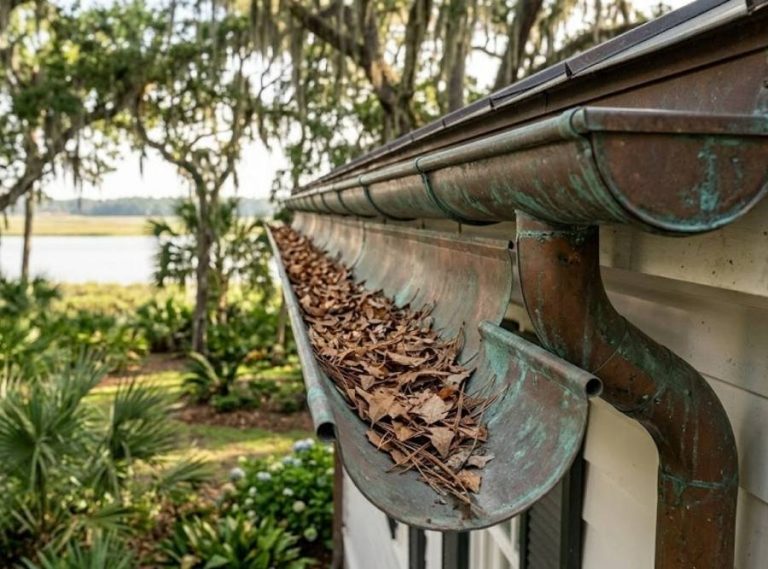
Properties throughout Bloomingdale also experience different environmental conditions depending on their location. Buildings near older portions of the community, Black Creek, Pine Barren Road, or heavily wooded areas often collect leaves, pine needles, and organic debris much faster than developments closer to newer commercial corridors toward Pooler. Facilities located near I-16 may also accumulate airborne dust, pollen, and lightweight debris carried by wind, gradually reducing drainage capacity even when gutters appear relatively clean from ground level.
Commercial roof systems also handle significantly larger volumes of water than most residential homes. Long gutter runs, box gutters, roof drains, collector boxes, scuppers, and oversized downspouts all work together to manage runoff, and a restriction in only one part of that system can affect the performance of everything downstream. Routine inspections evaluate these components together instead of focusing solely on whether leaves need to be removed.
Liability Usually Develops Gradually Instead of Suddenly
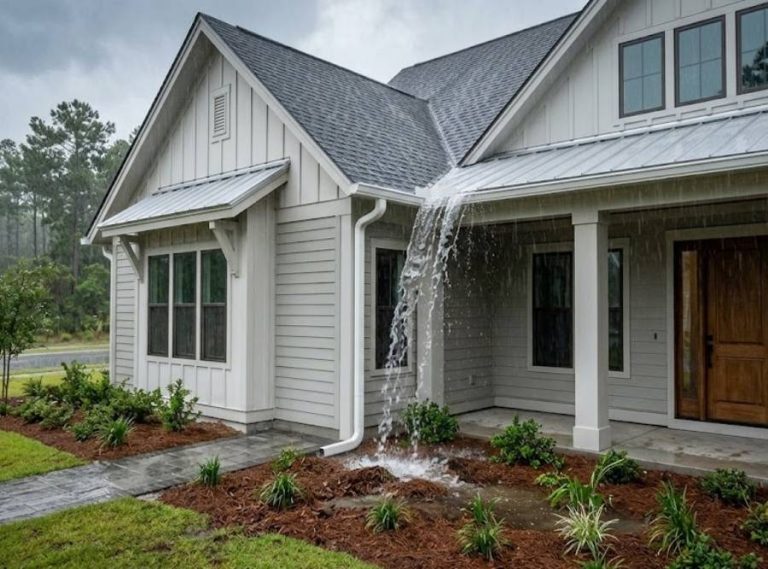
Many property owners associate liability with major storms or catastrophic failures, but commercial gutter-related liability usually develops through small issues that are allowed to worsen over time. A partially blocked outlet begins causing water to overflow near one entrance during heavy rain.
Over several months, that overflow creates standing water on the sidewalk, washes mulch onto pedestrian areas, stains exterior walls, and increases the likelihood that customers or employees will encounter slippery conditions. None of these issues may seem urgent individually, yet together they indicate that the drainage system is no longer performing as intended.
The same pattern occurs around loading docks, employee entrances, and service areas. Water repeatedly flowing across pavement can contribute to erosion, accelerate concrete deterioration, and create persistent wet areas that become safety concerns during every storm. Meanwhile, moisture running behind the gutter may quietly damage fascia boards, soffits, or wall assemblies without producing obvious warning signs inside the building.
Regular inspections help interrupt that progression before it becomes expensive. Instead of waiting for tenant complaints, insurance recommendations, or visible building damage, facility managers can identify deteriorating sealants, loose brackets, blocked outlets, developing corrosion, or sagging sections while repairs remain relatively straightforward. That proactive approach not only extends the life of the drainage system but also helps reduce the operational and liability risks that often accompany deferred maintenance.
Commercial Roof Drainage Systems Need More Than an Annual Check
One of the biggest misconceptions surrounding commercial gutters is that an annual inspection is enough for every property. In reality, inspection frequency should reflect how the building performs throughout the year rather than following a single date on the calendar.
For many commercial properties near I-16 in Bloomingdale, a comprehensive inspection in the spring, another before the peak of hurricane season, and additional evaluations after significant storms provide a much clearer picture of the drainage system’s condition. This approach allows maintenance teams to identify developing issues before seasonal rainfall places the system under its greatest stress.
Storms often reveal problems that are impossible to identify on a dry day. A gutter may appear perfectly level during a routine walkaround, yet overflow once heavy rain exposes a partially blocked outlet or an area where the pitch has gradually changed. Downspouts may drain normally during light showers but become overwhelmed during Georgia’s intense thunderstorms because debris has reduced their capacity. Watching how the system performs during or immediately after rainfall often provides valuable information that complements a scheduled inspection.
Commercial properties also change over time. Trees mature, landscaping grows, nearby construction creates additional airborne dust, and HVAC equipment or rooftop improvements alter drainage patterns. Regular inspections help account for these changes instead of assuming the gutter system still performs exactly as it did when the building was first constructed.
Every Inspection Should Evaluate the Entire Drainage System
A thorough commercial gutter inspection involves much more than looking inside the gutters for leaves. Every component that carries water away from the roof should be evaluated because one small restriction can affect the performance of the entire drainage system. This includes gutters, box gutters where applicable, roof drains, scuppers, collector boxes, downspouts, expansion joints, outlet tubes, brackets, hangers, sealants, and the fascia or structural attachment points supporting the system.
Inspectors should also look beyond the roof edge. Water stains running down exterior walls, soil erosion around the foundation, damaged landscaping, recurring puddles near entrances, and wet pavement that remains long after a storm can all indicate that water is no longer following its intended drainage path. Sometimes the gutter itself is functioning correctly while a blocked underground drain, damaged downspout connection, or restricted outlet farther along the system is creating the visible symptoms.
Just as important is evaluating the condition of the supporting structure. Loose fasteners, deteriorating fascia, corroded brackets, and separating joints often develop gradually and may not become obvious until the system carries the weight of a heavy rainstorm. Identifying these issues before they become structural failures allows repairs to remain localized instead of requiring extensive replacement.
Deferred Maintenance Often Creates the Greatest Liability
Commercial gutter failures rarely begin as emergencies. More often, they start with a small leak, minor overflow, or isolated blockage that seems easy to postpone because the building continues functioning normally. Over time, however, repeated exposure to water begins affecting surrounding building components. Overflow saturates landscaping, water stains become larger, fascia starts deteriorating, and moisture works its way into soffits or wall assemblies. Eventually, what began as a relatively inexpensive maintenance issue becomes a repair involving multiple trades and significantly higher costs.
From a liability standpoint, the greatest concern is often not the gutter itself but where the water ends up. Water flowing across sidewalks, collecting near entrances, or creating slippery conditions around loading docks increases the likelihood of accidents involving customers, tenants, delivery personnel, or employees. Even when no one is injured, recurring drainage problems can generate tenant complaints, disrupt business operations, and lead to questions from insurers or property managers about the building’s maintenance practices.
Routine inspections help demonstrate that drainage issues are being monitored rather than ignored. While no maintenance program can eliminate every unexpected problem, documenting inspections, repairs, and cleaning schedules creates a proactive maintenance history that supports responsible facility management and helps reduce the likelihood of small issues developing into major liabilities.
Warning Signs That Should Never Wait Until the Next Scheduled Inspection
Although routine inspections provide an excellent maintenance framework, certain conditions deserve immediate attention regardless of when the last inspection occurred. Water pouring over gutters during an average rainstorm, standing water near storefront entrances, overflowing box gutters, gutters pulling away from the building, or downspouts separating from their connections all indicate that the drainage system is no longer performing as intended. Waiting several months for the next scheduled inspection may allow additional damage to occur every time it rains.
Facility managers should also pay close attention to recurring complaints from employees or tenants. Reports of puddles forming near entrances, water dripping onto customers, persistent wet sidewalks, or leaks appearing inside the building after storms often point to drainage deficiencies that require investigation. These observations provide valuable information because they reflect how the building performs during actual weather conditions rather than during a routine visual inspection on a clear day.
Post-storm inspections are equally important. Tropical systems, strong wind events, and severe thunderstorms can loosen brackets, shift gutter sections, clog outlets with debris, or damage downspouts without creating immediately visible structural problems. Confirming that the drainage system remains secure after severe weather is often far less expensive than discovering hidden damage weeks later during the next major rainfall.
A Preventive Inspection Program Usually Costs Less Than Reactive Repairs
For most commercial properties, scheduled inspections become one of the most cost-effective parts of a preventive maintenance program. Identifying deteriorating sealant, replacing a few loose hangers, clearing partially blocked outlets, or repairing localized corrosion generally represents a relatively small investment compared to replacing damaged fascia, restoring water-damaged interiors, repairing sidewalks, or addressing foundation drainage issues caused by years of unmanaged overflow.
Preventive inspections also make budgeting easier. Instead of responding to unexpected failures during peak storm season, property owners can schedule repairs at convenient times, coordinate maintenance with other building improvements, and prioritize components that are approaching the end of their service life. This planned approach reduces emergency service calls while extending the overall lifespan of the commercial gutter system.
For multi-tenant buildings, shopping centers, warehouses, and industrial facilities, consistent maintenance also helps reduce operational disruptions. Planned inspections can often be scheduled around business activities, while emergency drainage failures frequently interrupt deliveries, customer access, or tenant operations at the least convenient time.
Protecting the Building Also Means Protecting the People Around It
Commercial gutters do much more than move rainwater away from a roof. They help protect building entrances, loading areas, sidewalks, landscaping, parking lots, foundations, and the people who use those spaces every day. Near I-16 in Bloomingdale, where frequent thunderstorms, coastal humidity, seasonal debris, and heavy rainfall place consistent demands on commercial drainage systems, inspections should be viewed as an essential part of facility management rather than an optional maintenance task.
At Spartina Seamless Gutters, we recommend inspection schedules based on the property’s size, roof configuration, surrounding environment, and drainage demands rather than relying on a one-size-fits-all timetable. By evaluating gutters, box gutters, roof drains, downspouts, outlets, hangers, and supporting components together, we help commercial property owners identify developing problems before they become costly repairs, operational disruptions, or liability concerns.