How Does Pluff Mud and Soft Coastal Soil Affect Gutter Drainage and Downspout Placement?
Pluff mud and other soft coastal soils around Isle of Hope can make gutter drainage problems worse because they stay saturated longer, erode easily under concentrated roof runoff, and provide weak support for splash blocks, downspout extensions, and underground drainage components. Downspouts must be placed and extended carefully so water reaches a stable discharge area without washing out landscaping, settling beside the foundation, or increasing crawl space moisture.
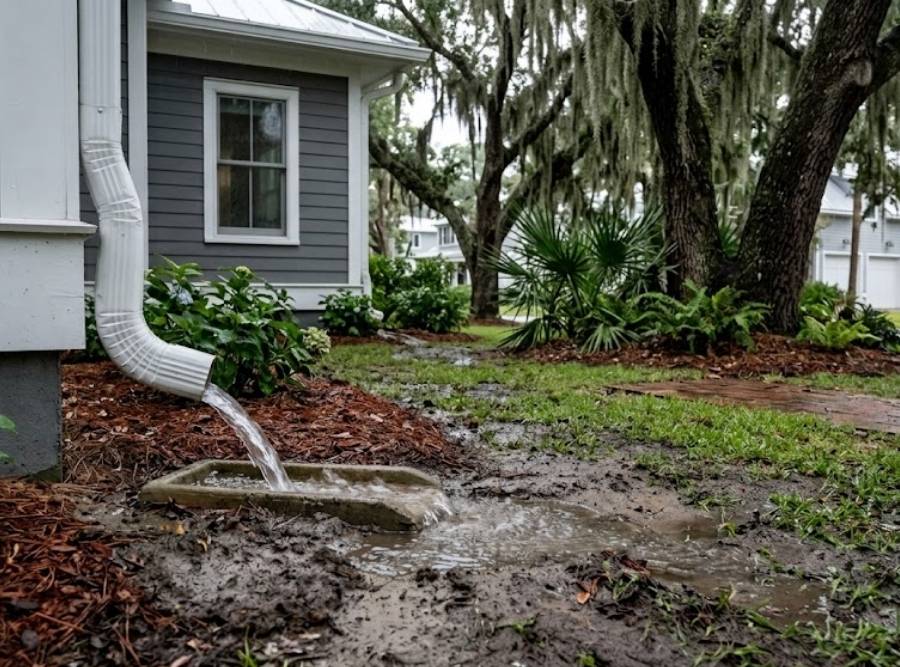
Many Isle of Hope homeowners assume that a drainage problem begins with clogged or undersized gutters. In reality, the gutter system may be collecting roof runoff correctly while the discharge point is sending that water into soil that cannot absorb or redirect it fast enough. When a downspout releases a concentrated stream onto soft ground, the soil can quickly become saturated, shift, or wash away. The result is often a muddy depression, standing water, damaged landscaping, or runoff moving back toward the home.
This distinction matters because installing larger gutters does not automatically solve a ground-level drainage problem. Larger gutters can move more water, but that water still needs somewhere safe to go once it reaches the bottom of the downspout. If the outlet ends only a foot or two from the foundation, the system may deliver roof runoff efficiently into the exact area that needs to remain dry. In coastal communities such as Isle of Hope, the discharge plan is therefore just as important as gutter size and downspout capacity.
Homes near Bluff Drive, the Skidaway River, Herb River, or other marsh-influenced areas may remain damp longer between storms than properties on higher or better-drained ground. High humidity slows evaporation, while tidal influence and shallow groundwater can keep surrounding soils moist even when there has not been recent rainfall. A downspout that performs acceptably during dry conditions may create immediate pooling once the soil is already saturated. That is why drainage should be evaluated during or shortly after actual rainfall whenever possible.
Pluff Mud Is Not the Same as Ordinary Yard Soil
Pluff mud is the dark, soft organic sediment commonly associated with Georgia’s tidal marshes. It contains decomposed plant material, fine sediment, and a high amount of retained moisture, which gives it its familiar soft and unstable consistency. Not every Isle of Hope yard is built directly on exposed pluff mud, but many properties contain fill, organic coastal soil, or low-lying ground with similar drainage limitations. These soils often lose strength when saturated and may stay wet much longer than sandy or well-graded inland soils.
When roof runoff repeatedly strikes one small area, the ground can no longer support a splash block or downspout extension evenly. Decorative stone may begin sinking, plastic extensions may shift, and the outlet can settle lower after every storm. Once the discharge point drops, water may stop moving away from the house and begin collecting around the downspout. Homeowners often respond by adding more soil or mulch, but those materials usually wash away unless the water path itself is corrected.
Soft soil also makes erosion less obvious at first. Instead of producing one dramatic washout, water may remove a thin layer of soil during every heavy rain. Over time, the grade changes, shallow channels form, and water begins following those channels toward the foundation or crawl space vents. By the time the homeowner notices a deep rut or leaning downspout, the drainage pattern may have been changing for several seasons.
Downspouts Should Not Empty Directly Beside the Foundation
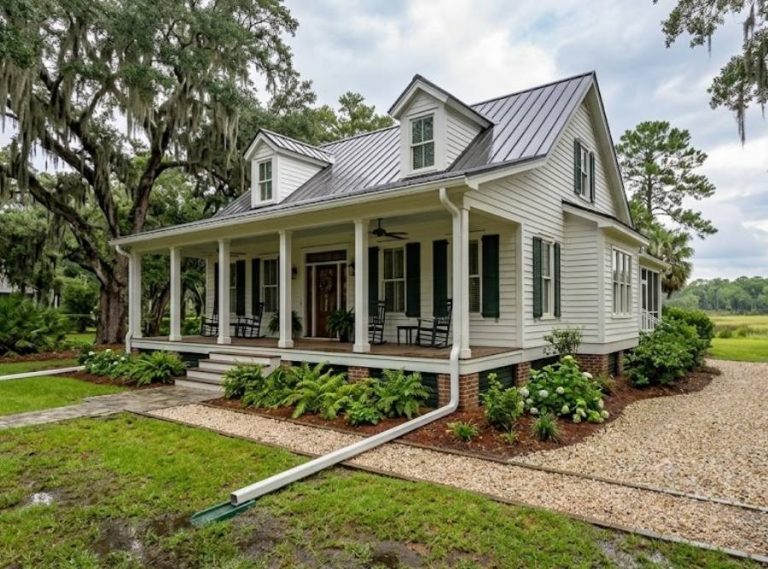
One of the most common drainage problems on older Isle of Hope homes is a short downspout that ends close to the foundation. Many historic cottages, raised homes, ranch houses, and renovated properties were built before modern roof drainage expectations became common. Their original systems may have relied on short elbows, movable splash blocks, or natural yard slope to carry water away. Those approaches become less reliable when soil settles, landscaping changes, or the surrounding ground remains saturated.
Water released beside the house can migrate into crawl spaces, collect near foundation piers, and keep wood framing or insulation exposed to elevated moisture. The homeowner may notice a musty smell, damp foundation vents, sweating ductwork, or higher humidity indoors without connecting the issue to roof runoff. Because the water arrives only during rain, the area may partially dry before anyone inspects it. Repeated wetting, however, can create mold-friendly conditions and increase the likelihood of wood deterioration or pest activity.
The correct extension distance depends on the lot, grade, roof area, and available discharge location. A small roof section on a well-sloped yard may require only a modest extension, while a large roof valley feeding one downspout may need a more substantial drainage route. The goal is not simply to move water several feet away. It is to deliver that water to a location where it can continue moving without returning toward the house or creating a new problem elsewhere.
Splash Blocks Often Sink or Shift in Soft Coastal Ground
Splash blocks are useful when they rest on firm, properly sloped soil and direct water away from the foundation. On soft coastal ground, however, they often settle unevenly or become displaced by repeated runoff. Once the end nearest the yard sinks, the splash block may hold water rather than release it. If the end near the downspout settles, the block can tilt back toward the house and quietly reverse the intended drainage direction.
Homeowners frequently reset splash blocks after storms, only to find them out of position again a few weeks later. This repeated movement is a sign that the soil beneath the block lacks stability or that the runoff volume is too concentrated for such a simple discharge method. Large roof surfaces, upper-story downspouts, and roof valleys can produce enough force to scour the soil around lightweight plastic or concrete blocks. In those cases, a longer extension, stabilized stone discharge area, or properly designed solid drain line may be more dependable.
Adding decorative rock around the outlet can reduce visible splashing, but it does not always solve the underlying erosion. Stone placed directly on soft mud may gradually sink and disappear, while water continues moving the soil underneath it. Effective erosion protection usually requires stable grading, appropriate base material, and a discharge path that spreads or carries water without concentrating it at one weak point.
Underground Drainage Can Fail Without Being Visible
Some Isle of Hope homes use underground piping to carry downspout water away from the foundation. When properly sloped and discharged, this can be an effective solution for properties with limited surface drainage options. Problems arise when lightweight flexible pipe is crushed, solid pipe settles, joints separate, roots enter the line, or the outlet becomes buried. Because most of the system is hidden, homeowners may assume it is working until water backs up at the downspout or begins pooling beside the house.
Soft soil can contribute to underground drainage failure by allowing sections of pipe to settle unevenly. A line that originally had consistent slope may develop a low spot where water and debris remain trapped. Sediment carried from the gutter can collect in that section, gradually reducing capacity. During a heavy coastal thunderstorm, the line may accept some water but not enough to keep up with the roof runoff, creating overflow near the foundation.
Pop-up emitters and drain outlets can also sink below grade or become surrounded by grass, mulch, and sediment. Once the discharge point is obstructed, the entire underground system may stay full after rainfall. That standing water increases the chance of joint leakage, mosquito activity, and soil saturation along the buried line. Underground drainage should therefore be inspected as a functioning system rather than treated as a permanent, maintenance-free installation.
Roof Size and Valley Runoff Determine How Much Water Reaches Each Outlet
The amount of water reaching a downspout depends on more than the length of the gutter beside it. Roof valleys can direct runoff from multiple roof planes into one concentrated section, creating far greater discharge than the gutter run suggests from the ground. Multi-story homes and larger waterfront properties may also send substantial water through a limited number of downspouts. During tropical downpours, one outlet can release a powerful stream capable of cutting into already saturated soil.
This is why downspout placement must reflect the roof’s drainage patterns. Adding an outlet where runoff naturally concentrates may reduce pressure on an overloaded section, but only if the new downspout has a safe discharge path. Moving water from the roof edge to the ground does not complete the drainage process. Every new outlet creates another location where soil stability, yard slope, foundation distance, and downstream flow must be considered.
Older homes along Bluff Drive and established streets near LaRoche Avenue may have rooflines altered by additions, porches, or renovations completed over many decades. The original gutter layout may no longer match the total roof area or current runoff pattern. A drainage assessment should account for those changes instead of assuming that existing downspout locations remain appropriate simply because they have always been there.
Poor Grading Can Send Gutter Water Back Toward the Home
Positive drainage means the ground slopes away from the foundation so surface water continues moving outward after it leaves the downspout. On many older or heavily landscaped properties, that slope changes gradually over time. Soil settles, planting beds are raised, landscape edging is installed, and mulch accumulates against the house. These changes can trap water even when the downspout appears to point in the correct direction.
A homeowner may extend the downspout into a flower bed and still see water collect beside the crawl space because the bed has become a shallow basin. Landscape borders, walkways, and driveway edges can act like small dams, preventing runoff from reaching lower ground. Irrigation can compound the problem by keeping the soil wet before the next storm begins. When the ground is already saturated, even moderate roof runoff may remain visible for a day or longer.
Simply adding topsoil to a low area rarely provides a lasting solution when concentrated water continues crossing it. Loose soil washes away, and poorly compacted fill may settle after several storms. The drainage path should be shaped and stabilized so water can move through the property without undermining sidewalks, fences, driveways, or neighboring land.
Standing Water Should Not Be Dismissed as Normal Coastal Living
Some moisture is expected in a low-lying coastal community, especially after tropical rain or during periods of elevated groundwater. Persistent standing water beside the foundation, however, should not be treated as unavoidable simply because the home is near a marsh. Roof runoff is a controllable source of water, and properly placed downspouts can prevent thousands of gallons from being released into vulnerable areas around the house.
The warning signs often begin with recurring mud, washed-out mulch, dying grass, or a splash block that never stays in place. As the problem develops, homeowners may notice mosquitoes, damp crawl space odors, soft ground around walkways, or erosion beneath driveway and sidewalk edges. These symptoms show that water is remaining where it should not, even if no interior leak has appeared. Addressing the drainage route early is usually much easier than correcting crawl space moisture or structural damage later.
The correct solution may involve extending a downspout, changing an outlet location, improving grade, stabilizing the discharge point, or repairing an underground drain. In more complicated yards, several measures may need to work together. The objective is always the same: move roof water away from the structure and release it where the surrounding soil and landscape can handle it safely.
Why Common DIY Fixes Often Fail in Soft Coastal Soil
Many homeowners begin with reasonable temporary measures such as moving a splash block, attaching a flexible extension, filling a washed-out area with dirt, or placing decorative rock beneath the downspout. These steps can reduce splashing for a short time, but they often fail because they treat the visible erosion rather than the way water is moving through the property. When a large roof area continues sending concentrated runoff into soft, saturated soil, loose fill and lightweight extensions are likely to shift again during the next heavy storm.
Flexible drain tubing is especially prone to problems when installed across uneven coastal ground. It can become crushed by lawn equipment, develop low spots that hold water, separate from the downspout, or become partially buried as the surrounding soil settles. Once the tubing loses a consistent slope, water and debris collect inside it, reducing flow and increasing the chance of backup near the house. A system that appears to carry water away during a light shower may still fail during a tropical downpour when the roof produces much more runoff.
Adding mulch or decorative stone can also conceal the early stages of erosion. The surface may look improved, but water can continue removing soil beneath the material and creating a hollow or unstable discharge area. In some cases, landscape edging traps the runoff and directs it back toward the foundation instead of allowing it to spread into the yard. A lasting correction requires the discharge point, soil support, and downstream path to work together.
Bigger Gutters Do Not Fix Ground-Level Drainage Problems
When water pools near the house, homeowners sometimes assume the gutters are too small. Undersized gutters can certainly overflow at the roof edge, especially where valleys concentrate large volumes of rainwater, but larger gutters do not solve a downspout that empties into unstable soil. In fact, increasing gutter capacity can deliver even more water to the same weak discharge point if the downspout layout and ground drainage are not corrected at the same time.
The first step is determining where the failure actually begins. If water spills over the front of the gutter during normal rain, the system may have a blockage, improper pitch, insufficient outlet capacity, or inadequate sizing. If the gutters and downspouts are flowing normally but the yard becomes muddy or water returns toward the foundation, the primary problem is more likely discharge management, grading, soil saturation, or an obstructed underground drain.
Roof runoff should be evaluated as one continuous path. Water moves from the roof surface into the gutter, through the outlet and downspout, and finally into a surface or underground drainage route. A problem at any point can affect everything around it. Correcting only the gutter while ignoring the soil and discharge conditions leaves the drainage system incomplete.
Downspout Placement Must Account for Crawl Space Vulnerability
Many Isle of Hope homes have crawl spaces, raised foundations, or older ventilation systems that are particularly sensitive to prolonged moisture around the perimeter. When a downspout empties near a foundation vent or low section of the yard, runoff can migrate beneath the home even if there is no dramatic flood. Repeated saturation raises humidity, slows the drying of wood framing, and can contribute to musty odors, damp insulation, condensation, and mold-friendly conditions.
The connection is not always obvious because crawl space moisture can have several sources. Humid outdoor air, plumbing leaks, groundwater, poor grading, and roof runoff may all contribute. However, when dampness becomes noticeably worse after storms or appears near one side of the house, the gutter discharge pattern deserves close attention. Water staining near vents, soft soil beside the foundation, and erosion below downspouts are strong indications that roof runoff may be part of the problem.
Moving a downspout only a few feet may not be enough if the new discharge point remains within a low area. The outlet must reach a stable path where water continues away from the house rather than collecting and slowly moving back beneath it. On constrained historic lots or properties near the water, this may require a more carefully designed route than a simple surface extension.
Underground Drain Lines Need Proper Slope and a Reliable Outlet
A solid underground drain can be an effective way to move water across an Isle of Hope property when the surface grade is limited or when a visible extension would interfere with walkways and landscaping. The line must be installed with consistent slope, durable connections, appropriate pipe, and an outlet that remains open. Without those conditions, the pipe can become another place where water stalls rather than a dependable drainage solution.
Soft coastal soil increases the importance of installation quality because the ground may settle after the line is buried. If the pipe is not properly supported, sections can drop and form low spots that retain water, sediment, roof granules, and organic debris. Over time, the drain may become partially restricted even though the upper connection remains intact. A homeowner may then see water backing up around the downspout and assume the gutters are clogged.
The discharge end also requires inspection. A pop-up emitter that sinks below grade, an outlet covered by mulch, or a pipe ending in another saturated area cannot release water effectively. Underground systems should therefore be tested during maintenance rather than assumed to remain functional indefinitely. Flushing the line, checking the outlet, and watching drainage during rainfall can reveal whether the system is carrying the expected volume.
Erosion Protection Must Be Designed for the Actual Runoff Force
The water leaving a downspout can have significant force, particularly when it receives runoff from a roof valley, large upper-story roof section, or multiple connected gutter runs. Placing a small splash block beneath that outlet may not provide enough protection when the ground is already soft. The concentrated flow can move the block, wash around its edges, and create a deeper channel after each storm.
Stabilized discharge areas can reduce this force by spreading the flow and protecting the underlying soil. Depending on the property, this may involve properly placed stone, erosion-control fabric, a longer solid extension, a catch basin, or a graded swale. The solution should not simply cover the mud; it should prevent water from continuing to remove the soil beneath the outlet.
Care is also needed when using stone near older homes and landscaped areas. Loose decorative rock can migrate, sink, or create maintenance issues if it is not installed over an appropriate base. Water may still flow beneath it and undermine nearby walkways or edging. The discharge design must account for where the water goes after it passes through the protected area.
Drainage Changes Should Not Shift the Problem to a Neighboring Property
Redirecting roof water farther into the yard can appear harmless, but the new route should be evaluated carefully on smaller or closely spaced lots. A downspout extension that sends water toward a neighboring foundation, shared driveway, sidewalk, or low property line may create a new drainage dispute. The goal is to manage runoff on the property without concentrating it where it can damage adjacent land or public areas.
Natural drainage patterns should not be blocked without understanding how water already moves across the lot. Raised planting beds, fences, landscape walls, sheds, patios, and driveway additions can alter those patterns and create unexpected pooling. A new extension may perform well at the house but overwhelm a lower area that previously handled only surface rainfall.
This is particularly important in established neighborhoods where properties have been altered over many decades. Historic homes, additions, detached garages, carriage-house structures, and mature landscaping can leave very limited paths for water. Drainage improvements should work with the site’s existing slope and legal discharge conditions rather than simply pushing runoff to the farthest visible point.
Warning Signs Show When the Problem Is Escalating
A small amount of splashing beneath a downspout may be manageable, but repeated washouts, standing water lasting more than a day, shifting splash blocks, and soft ground around the foundation indicate that the problem is progressing. Mud on siding, dead grass, exposed roots, leaning extensions, and erosion channels show that concentrated runoff is changing the property’s surface. These conditions often worsen quickly during periods of frequent summer storms because the soil has little opportunity to dry.
More serious warning signs include a damp or musty crawl space, wet insulation, persistent moisture around foundation vents, unstable walkway edges, and visible settlement near the discharge area. Water reaching exterior HVAC equipment, electrical components, or structural wood requires prompt attention. Large depressions or soft areas can also become trip hazards, especially where the drainage path crosses a walkway or side yard used regularly.
Foundation movement is not caused by every muddy downspout area, but prolonged perimeter saturation should not be ignored. Repeated wetting can reduce soil support, contribute to localized settlement, and place additional moisture stress on older foundations. Addressing the runoff source early is usually far less disruptive than responding after structural or crawl space problems become visible.
Delayed Drainage Repairs Can Affect More Than the Landscaping
Early-stage drainage corrections may involve extending a downspout, stabilizing the outlet, improving a small section of grade, or repairing an isolated underground pipe. These improvements are generally limited in scope when the foundation, crawl space, and surrounding hardscape remain unaffected. The cost rises when water has been allowed to saturate the same area through multiple seasons.
Continued erosion can undermine sidewalk edges, loosen fence posts, wash out planting beds, and expose buried utilities or drain lines. Moisture that reaches the crawl space may lead to damaged insulation, wood repairs, dehumidification needs, mold remediation, or pest control. If an underground drain has collapsed or settled along its full length, the yard may need to be excavated and restored after replacement.
The most expensive cases are often those where several systems have been treated separately without correcting the original runoff path. Landscaping is replaced, crawl space moisture is addressed, and soil is added repeatedly, yet the downspout continues releasing water into the same vulnerable area. A complete drainage evaluation can help prevent that cycle by identifying how roof runoff contributes to the broader moisture problem.
The Right Solution Depends on the Entire Isle of Hope Property
There is no single downspout extension or drainage product that works for every home in Isle of Hope. A waterfront cottage near Bluff Drive may have limited slope, mature landscaping, and high surrounding moisture. A renovated ranch home near Parkersburg Road may have larger roof additions and several discharge points competing for the same yard area. A newer custom home toward Dutch Island may have underground drainage, but settlement or landscaping changes may have altered how the system performs.
A proper assessment should consider the roof area feeding each downspout, the number of valleys, gutter capacity, outlet location, soil stability, grade, crawl space configuration, and final discharge point. It should also distinguish between roof runoff, groundwater, irrigation, and tidal or marsh-related moisture. These sources can overlap, but each requires a different response.
The most reliable solution may be simple when the problem is identified early. In other cases, several measures may be needed, such as relocating an outlet, adding a solid extension, stabilizing the discharge area, improving grade, and repairing a buried drain. The objective is not to make the yard dry immediately after every coastal storm; it is to prevent roof runoff from creating avoidable erosion, foundation saturation, and crawl space moisture.
Protecting an Isle of Hope Home Starts With Managing Where Roof Water Ends Up
Gutters perform only the first part of the water-management process. They collect runoff from the roof, but downspouts, extensions, grading, and drainage features determine whether that water protects or threatens the property once it reaches the ground. In Isle of Hope’s soft coastal soils, a poorly placed outlet can create recurring mud, erosion, standing water, and moisture around the foundation even when the gutters themselves are clean and functioning correctly.
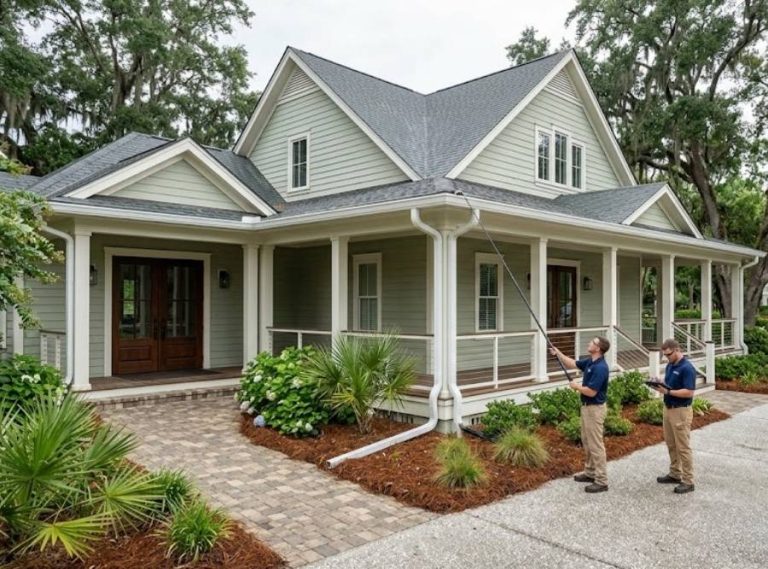
At Spartina Seamless Gutters, we evaluate how the full system moves water from the roof to the final discharge area. We look at gutter capacity, downspout placement, roof valleys, soil conditions, grading, erosion patterns, underground connections, and crawl space exposure before recommending a correction. This helps avoid temporary fixes that simply move the puddle while leaving the underlying drainage problem unresolved.
If your downspouts are sinking, landscaping washes away after every storm, or water remains beside your Isle of Hope home long after the rain stops, the discharge system should be evaluated before the next tropical downpour causes additional erosion or moisture damage.